The coating brand alone won’t tell you which system fits a commercial roof. In a Mule-Hide vs GAF commercial roof coating systems comparison, the right choice depends on the existing roof material and condition, the coating’s application requirements, and the project’s guarantee and energy goals.
It’s reasonable to expect a coating to work across different roof types, but compatibility isn’t automatic. A system that suits one substrate may not suit another, and temperature limits, contractor eligibility for guarantees, and cool-roof properties can differ by product. The roof’s drainage and overall condition matter, too.
This comparison explains what to weigh before choosing: compatible substrates, temperature flexibility, guarantee requirements, and cool-roof efficiency. It also clarifies why an inspection comes before a coating recommendation. That way, building owners and facility managers can compare systems against the roof they actually have, rather than relying on brand names alone.
Key Takeaways
- Match a coating to the existing roof material and its condition before comparing brands.
- Review application temperature requirements alongside the weather expected during the project.
- Understand how contractor eligibility and system requirements affect guarantee options.
- Consider how a reflective coating may support cool-roof goals without assuming a specific energy outcome.
- Use a professional inspection to determine whether coating, repair, or another roof solution fits the building.
Commercial roof substrates compatible with coatings
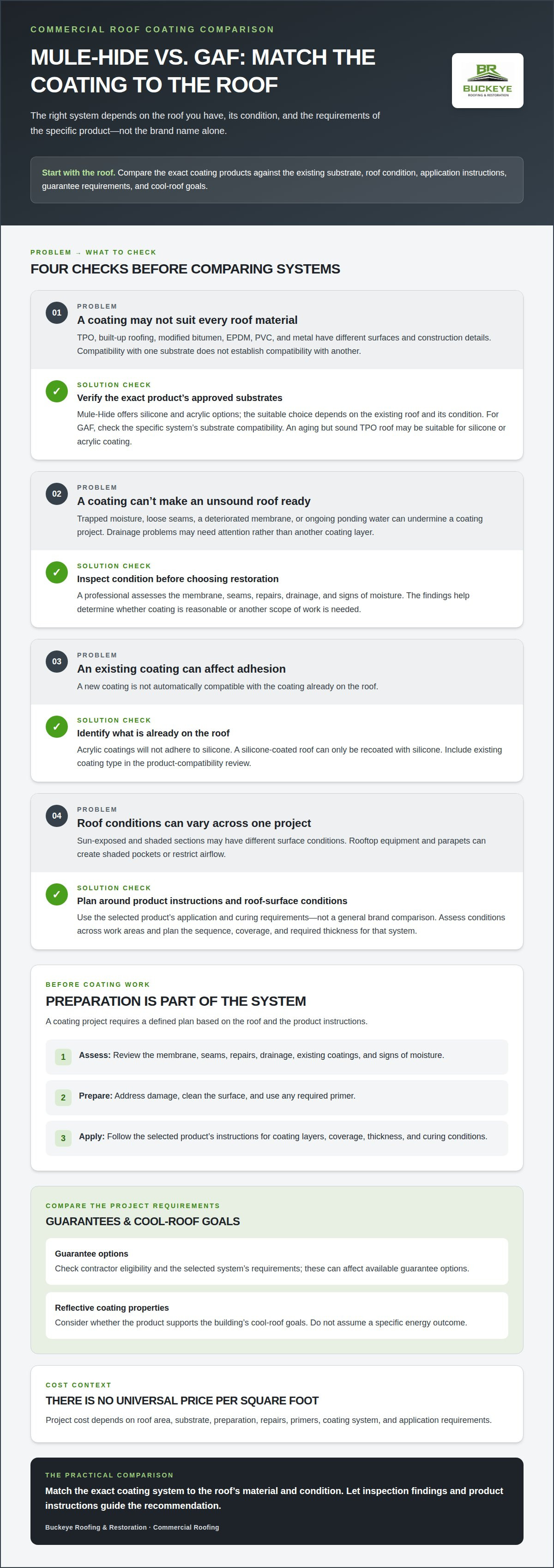
Mule-Hide and GAF coatings should be compared by chemistry and approved substrate, not brand name alone. Mule-Hide offers silicone and acrylic coating options; the suitable choice depends on the existing roof and its condition. For GAF, the specific system’s stated substrate compatibility is the practical comparison point.
An aging but sound TPO roof may be suitable for silicone or acrylic coating. Restoration can extend the roof’s service life and delay replacement. “Sound” matters: trapped moisture, loose seams, or a deteriorated membrane can undermine a coating project, regardless of manufacturer.
Other low-slope roofs need their own compatibility review. Built-up roofing, modified bitumen, EPDM, PVC, and metal have different surfaces and construction details. A coating compatible with one substrate is not automatically suitable for another. Existing coatings matter, too. Acrylic coatings will not adhere to silicone, and a silicone-coated roof can only be recoated with silicone.
Preparation is a defined sequence, not a shortcut. A roofing professional assesses the membrane, seams, repairs, drainage, and signs of moisture before selecting a system. The work then addresses damage, cleans the surface, and applies any required primer and coating layers according to the product instructions. For example, a TPO roof with an incompatible old coating needs a different plan from sound, uncoated TPO.
GAF offers commercial roof coating systems, and the specific product’s chemistry and approved substrate list determine its fit. Compare those details with the Mule-Hide system under consideration; a brand-wide comparison can hide meaningful differences between products.
There is no reliable universal price per square foot for Mule-Hide versus GAF coatings. Project cost depends on roof area, substrate, preparation, repairs, primers, coating system, and application requirements. Contact Buckeye Roofing & Restoration to ask about a commercial roof inspection or quote in your area.
Common risks include poor adhesion, coating over wet or unsound roofing, and ongoing ponding water. Some systems may tolerate limited ponding, but persistent ponding requires professional evaluation and a review of drainage. Drainage problems may need attention rather than another coating layer. Product requirements and exclusions depend on the selected system and project conditions.
Before choosing, compare these items for the exact products under consideration:
- Approved substrates, including TPO and other existing roof materials.
- Required cleaning, repairs, primers, and coating application steps.
- Compatibility with existing coatings and the roof’s drainage condition.
For commercial roofing, the soundest comparison starts with the roof itself. Product chemistry matters, but substrate compatibility and preparation determine whether a coating is a reasonable restoration option or whether the roof needs a different scope of work.
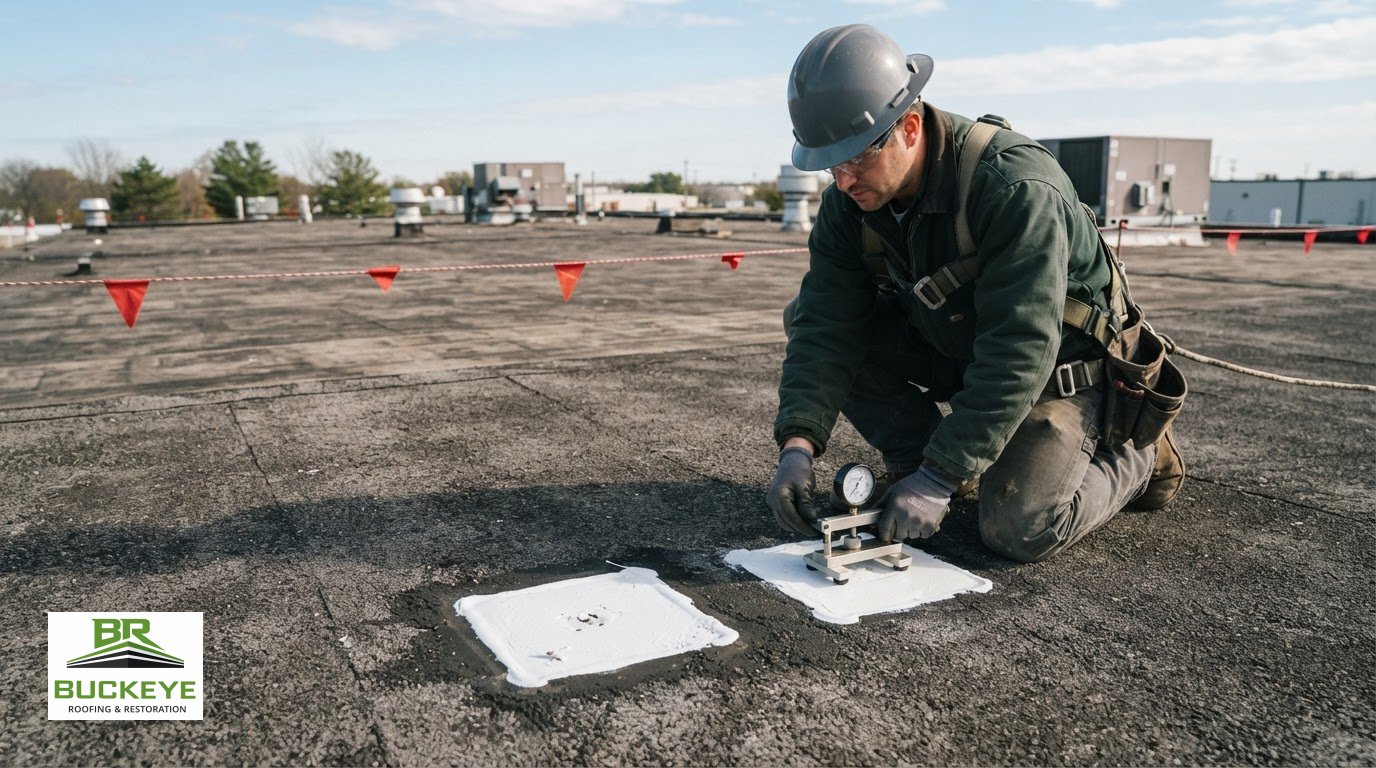
Single-ply membrane thickness is measured in mils, with each mil equal to 0.001 inch. When reviewing a roof, record the membrane description and thickness alongside its condition and any existing coating, then match those details against the coating system’s approved substrate information. Thickness is useful identification data, but it does not by itself establish that a coating will adhere or that the membrane is suitable for restoration. The assessment should still account for seams, repairs, moisture, and drainage, with product instructions guiding preparation and application.
Coating flexibility across temperature extremes
Temperature planning affects whether a commercial coating can be applied and cured as specified. Mule-Hide and GAF products each have product-specific application instructions. Those instructions, rather than a general brand comparison, establish the permitted conditions for the selected coating. Coverage rates and required thicknesses also depend on the product and system design, so use the applicable product documents instead of assuming one rate fits every roof.
Air temperature alone gives an incomplete picture. A roof surface can warm or cool differently from the surrounding air, and different sections may have different exposure. For example, a sun-exposed area and a shaded section can present different application conditions during the same work period. The coating crew needs to assess the actual work surface against the selected product’s requirements.
Timing matters across the full application sequence. The team plans when to apply each layer and allows the coating to cure under the specified conditions. A change in weather during the workday can affect exposed areas differently from sections completed earlier. Staging the work by roof area can help keep application conditions consistent across the project.
Site layout also shapes temperature planning. Rooftop equipment, parapets, and other obstructions can create shaded pockets or restrict airflow around particular work areas. Those locations may need a different work sequence from open roof sections. A crew can plan around these features rather than treating the entire roof as one uniform surface.
Coverage and thickness should be documented by system, not estimated from a broad product category. The selected Mule-Hide or GAF instructions determine the amount of coating and layer build required for that application. Surface texture, details, and the specified system can affect material use. The application plan should account for the full roof area and its transitions.
Before installation, the roofing team can organize the work around these checks:
- Confirm the exact coating and its application requirements.
- Assess conditions at the roof surface and across each work area.
- Plan the application sequence around roof features and changing exposure.
- Record the specified coverage and thickness for each system layer.
- Coordinate work timing with the product’s curing requirements.
For a facility manager, this comparison is about workable project conditions, not simply which brand sounds more flexible. The selected product’s instructions guide the application plan, while roof layout and changing site conditions shape how the crew carries it out. A clear plan helps keep each area aligned with system requirements without relying on an assumed coverage rate or thickness.
Contractor certification and guarantee eligibility
For Mule-Hide and GAF coatings, contractor eligibility depends on the requirements for the specific system and any requested manufacturer coverage. General commercial roofing experience does not automatically establish eligibility. Before scheduling work, identify the proposed product, applicable qualification requirements, and documentation needed to support the requested coverage.
Separate manufacturer coverage from the contractor’s workmanship commitment. Manufacturer coverage applies according to its written terms and the covered system. A workmanship commitment addresses installation responsibilities described in the contractor’s agreement. These documents serve different purposes, so keep their scope, duration, and exclusions clear rather than treating one as a substitute for the other.
For a proposed silicone system, review the applicable manufacturer documents for installer qualifications, approved components, inspection steps, and project records. Then apply the same review to the specific GAF system under consideration. Requirements can vary by product and guarantee option. Confirming the applicable requirements before finalizing the schedule can prevent avoidable delays or scope changes.
Coverage conditions can also shape the project scope. If the selected system requires particular components or installation records, include those items in the proposal and work plan. For example, a property manager can compare proposals more accurately when each identifies the specified system, included preparation, and records the contractor will provide after installation.
Define responsibilities before work begins. The agreement can identify who handles project documentation, coordinates any required inspections, and provides closeout materials. It should also distinguish included work from excluded conditions. Clear scope language helps facility teams understand what the contractor will complete and which responsibilities remain with the building owner after the project.
Use these points to organize the comparison:
- Identify the exact Mule-Hide or GAF system and guarantee option proposed.
- Document any installer qualifications and project inspections required by its terms.
- Align the proposal, specified components, and installation records with those requirements.
- Review exclusions, maintenance conditions, and procedures for submitting a claim.
- Keep manufacturer coverage separate from the contractor’s written workmanship commitment.
A stated coverage period alone does not show how two systems compare. The covered assembly, conditions, exclusions, and owner responsibilities all affect its practical value. Reviewing the actual documents alongside the project scope gives building owners a clearer basis for comparing proposals and planning ongoing roof records.
Eligibility documents cannot make an unsuitable roof suitable for coating. They define conditions for a particular system; they do not replace sound project planning. A careful proposal connects the selected product, contractor qualifications, installation scope, and required records before work is scheduled.
Cool-roof energy efficiency
Mule-Hide and GAF can’t be ranked universally for durability, reflectivity, energy efficiency, or maintenance. Compare the exact coating products and their documented performance, then consider how each fits the building’s operating needs.
A useful energy review starts with the building’s own records. Facility managers can compare energy use before and after a roof project while noting changes in occupancy, equipment, or operating schedules. For example, a warehouse adding new cooling equipment during the same period could not attribute every change in energy use to its roof coating.
Weather also affects comparisons over time. A mild cooling season and a hotter season can produce different building demand, even if the roof remains unchanged. A sound review records the period being compared and considers whether other major building changes occurred. That context is more useful than treating a single utility bill as proof of coating performance.
Reflectivity is one part of the decision, but the building’s use determines how relevant that property is. A facility with daytime cooling demand has a different operating profile from a building that runs equipment continuously. Roof area, mechanical systems, insulation, and internal heat loads all influence how roof conditions relate to energy use.
Durability should be assessed through product documentation and the roof’s exposure, not through a brand-level assumption. A maintenance plan can record the coating’s condition, repairs, and observed wear at each professional inspection. For example, documenting a change around rooftop equipment helps distinguish localized damage from a broader surface issue.
Before comparing systems, a property team can gather:
- Product data for each specific coating under consideration.
- Utility records and notes about building operating changes.
- Existing roof records, including prior repairs and coating work.
- Inspection notes that track coating condition and maintenance needs.
These records help keep efficiency claims tied to the actual building. They also give the facility manager a practical way to assess whether the selected system continues to meet the project’s goals. If energy use changes, the team can review roof observations alongside equipment, schedule, occupancy, and weather records instead of assuming one cause.
For Mule-Hide and GAF, the meaningful comparison is product-specific: documented reflective properties, system requirements, and maintenance guidance. A proposal that connects those details to the building’s operating profile gives owners a clearer basis for deciding what matters. It also sets a useful starting point for reviewing performance and upkeep after the work is complete.
There is no universal brand-level difference to rely on for durability, reflectivity, energy efficiency, or maintenance. Compare the specific products’ documented reflective properties, system requirements, durability information, and maintenance guidance against the building’s operating needs and roof exposure.
What commercial roof coating systems does Mule-Hide offer?
Mule-Hide commercial roof coating options discussed here include silicone and acrylic coatings. The right system depends on roof material, existing surface, drainage, and project requirements. These coating types are not interchangeable: the selected product must suit the substrate and any existing coating.
Silicone is one option for roofs that need a coating system suited to occasional ponding water. Regular ponding may indicate a drainage problem, and whether a coating is suitable for those conditions depends on the specific product instructions and inspection findings. Mule-Hide silicone coating allows same-day recoating, a scheduling detail that can distinguish it from systems requiring longer between coats. Application instructions and site conditions still govern each project.
Acrylic is another coating type for suitable roofs, including aging but sound TPO. It is not compatible with a silicone-coated surface. If an existing roof already has silicone, the product instructions and inspection findings will determine whether silicone or another system is suitable for recoating. That existing layer can therefore affect the available system choices before new material is applied.
Mule-Hide A-300 Base and A-300 Base TPO provide another product-level detail to understand. A-300 Base is gray, while A-300 Base TPO is light blue. Those colors distinguish base-coated areas from top-coated areas during application. They are identification aids, not a substitute for confirming the specified system and application sequence.
A useful Mule-Hide vs GAF commercial roof coating systems comparison focuses on the exact products, not just the manufacturers. Compare coating chemistry, approved substrates, product instructions, required layers, and recoat timing. Silicone and acrylic can behave differently on the same roof, especially where an existing coating affects adhesion.
Before selecting a system, a commercial roofing professional evaluates the roof’s condition and surface. That review includes membrane seams, previous repairs, moisture, drainage, and areas around penetrations. For example, sound TPO may be a candidate for coating, while wet or deteriorated sections need attention before a coating decision.
Use these points to narrow the comparison:
- Identify the existing roof material and any coating already on its surface.
- Match the proposed coating chemistry to that substrate and existing layer.
- Review the product’s application sequence, recoat timing, and surface preparation requirements.
- Address repairs and drainage concerns before specifying a coating system.
For a Mule-Hide vs GAF commercial roof coating systems comparison, first determine whether the roof can support restoration. A coating restores a suitable existing roof surface; it does not replace an unsuitable or failing roof assembly. A professional roof inspection and coating assessment can help determine whether the roof’s condition, substrate, and drainage support restoration.
Buckeye Roofing & Restoration: Commercial Roof Coatings
Buckeye Roofing & Restoration helps commercial property owners assess whether roof coatings suit their building. A coating may be an option when the existing roof and substrate are suitable, but moisture, drainage problems, or significant deterioration can change the recommendation.
For commercial flat roofs, an inspection can assess surface condition, existing materials, repairs, and drainage before choosing a coating approach. Buckeye also handles commercial flat roof repair and TPO and EPDM roofing systems, helping address roof-specific needs beyond coating selection. The appropriate scope depends on inspection findings, not brand preference alone.
If you’re comparing systems or considering coating an existing roof, contact Buckeye Roofing & Restoration to discuss an inspection and the practical next step for your building.
Choose the next step for your commercial roof
A useful coating decision starts with the building’s needs, not a preference for a manufacturer. Your comparison of Mule-Hide vs GAF commercial roof coating systems should lead to a practical question: what work will address the roof’s condition and support its ongoing care? An inspection gives property owners and facility managers a sound basis for deciding whether a coating belongs in the plan.
Buckeye Roofing & Restoration provides commercial flat roofing, commercial flat-roof repair, and commercial roof restoration. These services offer options when inspection findings point beyond coating alone. The right scope depends on the roof, so a coating recommendation should follow an assessment rather than replace one.
Take the next step at a pace that works for your facility. Contact Buckeye Roofing & Restoration to discuss your commercial roof and determine what should be evaluated. A clear assessment can help you move forward with a solution suited to the building.
Frequently Asked Questions
Are Mule-Hide and GAF roof coatings suitable for EPDM, TPO, PVC, metal, modified bitumen, and built-up roofs?
Not automatically; suitability depends on the specific coating and roof assembly. An aging, sound TPO roof may be suitable for silicone or acrylic, but that does not establish compatibility for EPDM, PVC, metal, modified bitumen, or built-up roofing. For each system, match the product’s approved substrate and preparation requirements to the roof being assessed. Mixed materials or previous repairs may also affect the selection.
What roof preparation and application steps are required for Mule-Hide versus GAF coatings?
For either brand, first assess the membrane, seams, repairs, drainage, and moisture; address damage and clean the surface, then apply any required primer and coating layers according to the selected product’s instructions. Preparation and application requirements depend on the specific system and substrate.
What are the durability, reflectivity, energy-efficiency, and maintenance differences between Mule-Hide and GAF coatings?
Silicone can withstand occasional ponding water, but no coating can withstand regular ponding water. That fact alone does not compare Mule-Hide and GAF coatings on reflectivity, energy efficiency, or maintenance.
What are the coverage rates, required thicknesses, and application conditions for Mule-Hide and GAF coatings?
The selected product’s instructions determine coverage rates, required thicknesses, and permitted application conditions. The crew should assess roof-surface conditions, plan application and curing, and follow the specified requirements; a consecutive coat usually requires 24 hours of curing.

Article by
Harry Stanley III
Harry Stanley III is a construction marketing strategist and fractional CMO at H&A Marketing. He has helped construction companies grow through website strategy, SEO, paid advertising, branding, lead generation, CRM systems, and professional content. His past work includes helping Meraki Solar generate an additional $3.7 million in revenue in his first year and supporting American Builders as a fractional CMO. Today, Harry works directly with custom home builders and construction companies to build marketing systems designed to generate qualified leads and measurable growth.