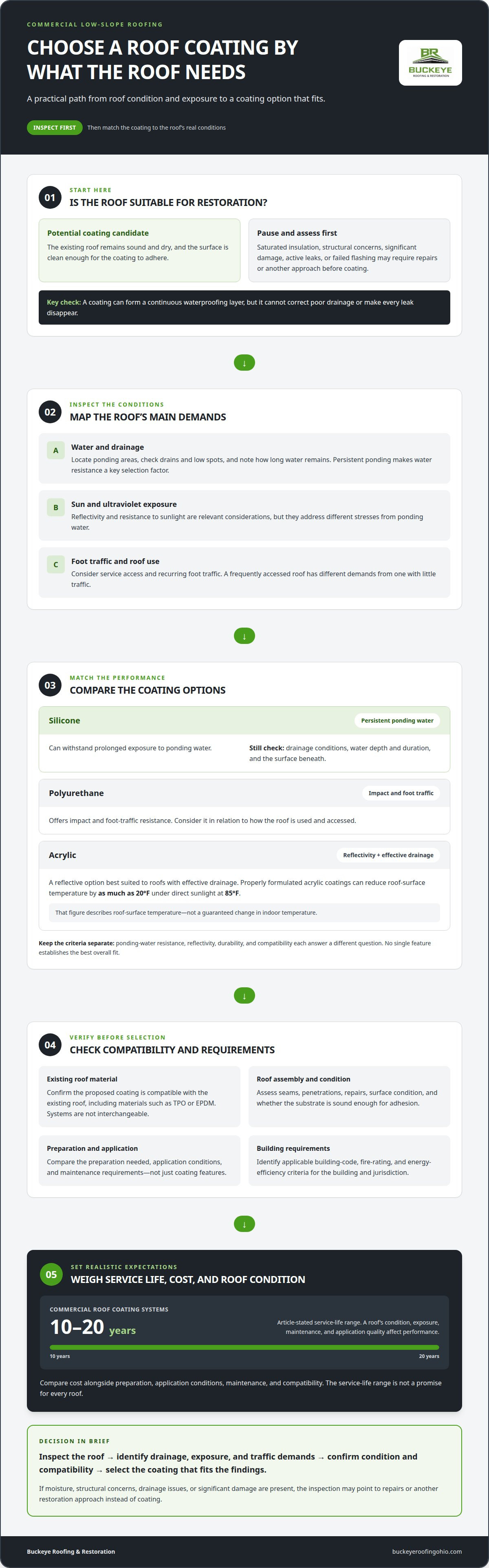
The longest-lasting coating isn’t automatically the right fit for a low-slope roof. Choosing among commercial roof restoration coating options depends on the existing roof, drainage, exposure to ponding water, and foot traffic. Silicone is suited to roofs exposed to standing water, polyurethane offers strong impact and foot-traffic resistance, and acrylic is reflective and best suited to roofs with effective drainage.
It’s reasonable to weigh cost and service life first, but compatibility and roof condition matter just as much. Coatings can extend the service life of a roof that remains sound and dry, while saturated insulation or structural damage may call for a different solution. Most commercial roof coating systems last between 10 and 20 years.
This guide compares coating types by performance, reflectivity, durability, compatibility, and cost considerations. It also explains what an inspection should establish before work begins, so you can see which options may suit your building and when coating may not be the right solution.
Key Takeaways
- Match the coating to the roof’s drainage, existing material, exposure, and expected foot traffic rather than choosing by one feature alone.
- Use ponding-water resistance and reflectivity as separate criteria; a coating’s strength in one area doesn’t automatically make it the best fit overall.
- Compare service life and durability alongside preparation, application conditions, and maintenance needs when weighing long-term value.
- Coatings are intended for roofs that remain suitable for restoration; underlying moisture, structural concerns, or significant damage can change the recommended approach.
- A professional inspection can clarify whether coating, repair, or another restoration approach fits the roof’s condition.
Ponding-water resistance
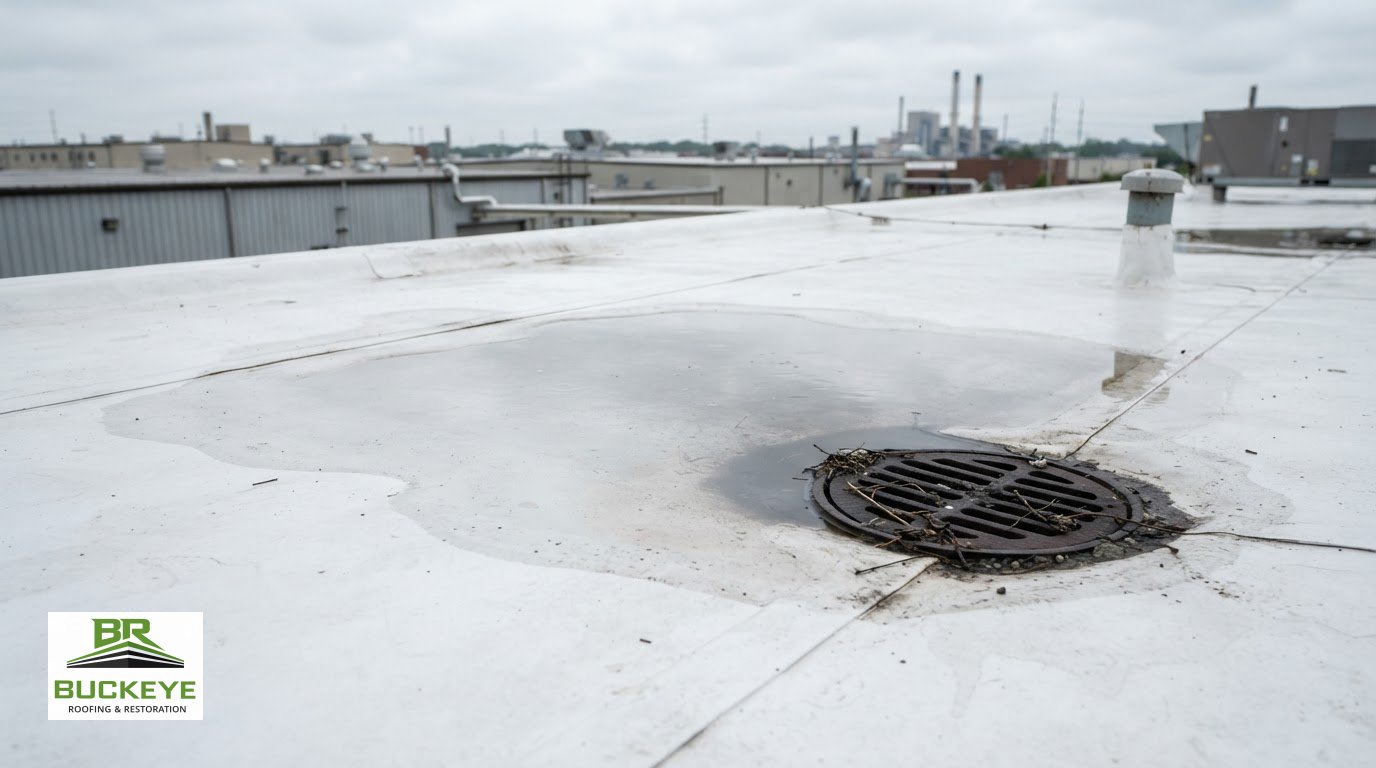
On a low-slope commercial roof, ponding water collects in areas that drain slowly instead of flowing toward drains or roof edges. The water keeps the surface wet longer, putting added demands on seams, penetrations, and repairs. A coating can create a continuous waterproofing layer, but it cannot correct poor drainage on its own. The roof’s slope, drain locations, and existing low spots all matter when choosing a coating.
Silicone is often considered for roofs where ponding water remains after rain. Silicone coatings can withstand prolonged exposure to ponding water, making them relevant for roofs with persistent wet areas. That resistance doesn’t mean drainage problems should be ignored. If a warehouse roof repeatedly holds water near a drain, both the coating choice and the drainage condition need attention. Water depth, how long it remains, and the surface beneath it are practical inspection points.
Coatings are applied as liquids over an existing roof and form a seamless membrane when cured. The layer can cover seams, small cracks, and irregular details that might otherwise let water through. Seamless waterproofing reduces reliance on exposed joints across the coated roof area, but it won’t make every leak disappear. Active leaks, failed flashing, and damaged areas need appropriate repairs before coating. The surface must also be clean and sound enough for the coating to adhere.
Silicone coatings suit commercial roofs exposed to ponding water, while polyurethane offers different performance characteristics. Polyurethane is known for impact and foot-traffic resistance, so roof use matters as much as water exposure. A roof with service access and recurring ponding faces different demands from one with little traffic. The coating must also be compatible with the existing roofing material, such as TPO or EPDM. These systems aren’t interchangeable, and compatibility shapes the restoration approach.
Water resistance and ultraviolet protection address different stresses. Ponding water tests how the coating handles extended moisture; sunlight exposes the roof to ultraviolet radiation and heat. Reflective roof coatings can reflect sunlight, while a continuous coating layer covers the existing surface. Cool-roof requirements have been integrated into building or energy standards or ordinances in at least 13 cities and counties, seven states, and the District of Columbia, according to the U.S. Environmental Protection Agency. That broad adoption makes reflectivity a useful consideration, but it doesn’t replace checking ponding conditions.
A professional assessment should identify where water collects, how well drainage works, and whether the roof beneath is suitable for coating. The inspection also considers seams, penetrations, surface condition, and the existing membrane. If water collects because a drain is obstructed or a low spot holds it, addressing that condition may be part of the plan. Coating selection should follow the inspection findings, not rely on a single claim on a product label. This helps match ponding-water resistance to the roof’s actual needs.
Reflective coatings and interior temperature
Building-code, fire-rating, and energy-efficiency requirements can affect which coating assembly suits a commercial roof. Requirements vary by jurisdiction and building, so applicable criteria should be identified before materials are selected. A reflective coating alone doesn’t establish that the complete roof assembly meets a building’s requirements.
Reflective coatings reduce the sunlight a roof absorbs, which can lower roof-surface temperatures. Properly formulated acrylic coatings can reduce roof-surface temperature by as much as 20 degrees F under direct sunlight at 85 degrees F. That figure describes the roof surface, not a guaranteed change in indoor temperature. Insulation, ventilation, building use, and existing roof construction also influence indoor conditions.
For a warehouse with a broad, sun-exposed roof, reflectivity may help limit heat absorbed through the roof. Less absorbed heat can support lower cooling demand, but actual energy use also depends on insulation, HVAC equipment, operating schedules, and weather. Assessing those factors gives a clearer picture than treating a coating as a stand-alone energy upgrade.
Reflectivity and ultraviolet resistance are related, but they aren’t the same. A reflective coating surface can reduce solar exposure at the roof, while UV resistance describes how the coating withstands sunlight over time. Acrylic coatings are reflective options, while silicone has different performance characteristics. Compare these properties with the roof’s material, exposure, and drainage.
A reflective finish can change how an existing asphalt-based roof absorbs heat. However, that doesn’t mean every coating will bond properly to every asphalt surface. The substrate’s condition matters, as do repairs and preparation before installation. A professional assessment identifies deteriorated areas and checks whether the proposed coating is compatible with the roof assembly.
Reflectivity may be one factor in extending a roof’s useful lifespan, but it can’t correct saturated insulation or structural damage. Most commercial roof coating systems last between 10 and 20 years. That range doesn’t promise the same service life for every roof; exposure, maintenance, application quality, and condition all affect performance. A coating is a restoration layer, not a substitute for sound underlying materials.
For a practical comparison, have the contractor consider reflectivity alongside drainage, UV exposure, substrate compatibility, and the building’s cooling needs. That keeps energy goals in context with roof performance. If the roof’s condition supports restoration, commercial roof restoration can be evaluated as part of the same decision, rather than choosing a coating based on color or reflectivity alone.
Durability, application, compatibility, and cost-effectiveness
Coating performance depends on the underlying roof, the selected system, and application quality. A professional assessment connects these factors to durability, service life, and project value.
Coating System Performance and Compatibility
Fluid-applied asphaltic rubber membrane systems form a fully adhered, seamless rubber membrane. Their dry thickness can range from 20 mils to 200 mils, depending on the specified system. That range makes the intended thickness and roof condition important parts of the assessment. Compatibility matters too: the existing roofing material and its condition help determine whether a coating can bond properly and perform as intended.
Silicone coatings should be assessed against the roof’s exposure, drainage, and surface condition, not just their stated water resistance. An inspection checks seams, penetrations, previous repairs, and areas where moisture may have entered. Saturated insulation or structural damage can undermine a coating system, even when the surface looks suitable. These findings help determine whether coating, repair, or another roof solution makes practical sense.
Application and Coverage Requirements
Coverage depends on the product, number of coats, and specified application thickness. For example, a five-gallon pail of Tar & Rubber or Metal Roof Coating covers 500 square feet per coat, or 250 square feet finished at the required two coats. That example is product-specific, not a universal rate. Professionals calculate material needs from the selected product’s requirements and the roof’s measured area.
Silicone coatings can often be applied in successive coats on the same day. The applicator must still follow the product’s specified thickness and surface-preparation requirements. Consistent coverage matters: thin spots can leave areas less protected, while uneven application can affect the finished membrane.
Before work begins, the roof is inspected, damaged areas are identified, and the surface is prepared. Debris, dirt, deteriorated coatings, and failed sealants need attention before a new coating is applied. Depending on the product, rain, unsuitable temperatures, or high humidity can disrupt application or curing. Keep roof traffic off the coating while it cures, as premature use can damage the membrane.
Common causes of coating failure include poor adhesion, missed repairs, incompatible materials, uneven thickness, and moisture beneath the coating. A coating also cannot correct major structural damage or replace saturated insulation. That’s why preparation and inspection matter as much as the coating choice.
Coating can reduce installation time and labor compared with roof replacement because it is applied over an existing roof. Restoration can be a cost-effective option when the roof is structurally sound and suitable for coating. The comparison depends on roof condition, preparation needs, drainage, and system requirements. A professional inspection helps determine whether coating can extend the roof’s life or whether repairs or replacement make more sense.
Acrylic roof coatings
Coating suitability is determined by inspecting the roof’s structure, substrate, moisture, and drainage. Coating can be appropriate when the existing roof is sound and dry enough to support the selected system. Saturated insulation or serious deck damage can make replacement more suitable, even if the visible surface looks intact. Inspection findings guide the recommendation.
Acrylic coatings are made from 100 percent acrylic and can be applied in one or more coats. Their reflective finish can reduce heat absorption, which may support energy efficiency on exposed roofs. Owners should also weigh drainage and surface condition. The right choice depends on how the coating performs on this roof, not reflectivity alone.
Application conditions matter. Do not treat 50 degrees F as a universal application threshold; the contractor should follow the selected product’s instructions for temperature, humidity, and weather. Cold weather and high humidity can affect curing, so conditions and product requirements should be considered before scheduling. Work in unsuitable conditions may affect the result.
Acrylic, silicone, and polyurethane coatings suit different roof conditions. Silicone may be suitable for prolonged ponding-water exposure, while acrylic emphasizes reflectivity and requires effective drainage. Polyurethane, also called urethane, may be selected where impact and foot-traffic resistance are considerations and is sometimes used in a base-coat and topcoat combination. Roof material, exposure, use, and inspection findings all shape the comparison.
Service life varies by coating type and roof conditions. Estimates sometimes cited for acrylic coatings are 5-10 years, compared with 10-15 years for silicone and polyurethane coatings; these are not guaranteed lifespans for a particular product or roof. Preparation, application quality, weather exposure, maintenance, and compatibility all influence performance.
Polyurethane coatings include aromatic and aliphatic types. Aliphatic polyurethane is used as a top surface in some systems. Product-specific properties, including UV stability, color retention, and resistance to dirt, should be verified with the manufacturer rather than assumed for every coating. Roof traffic and exposure are also useful factors when selecting a system.
Connect the coating recommendation to inspection findings, including moisture, substrate condition, drainage, and existing materials. Compare those findings with each coating’s application requirements and product-specific characteristics. Owners can also weigh expected maintenance against the building’s operating needs before choosing a system.
Coatings for flat and low-slope roofs
Commercial low-slope roofs are designed to drain, but their broad surfaces can retain water around drains, seams, and equipment supports. A coating can restore a suitable existing roof without the tear-off involved in full replacement. It is a surface-applied system, not a new structural roof. The key decision is whether the existing assembly is sound enough to support restoration.
Coatings are used over metal, TPO, PVC, EPDM, modified bitumen, and built-up roofing. These systems aren’t interchangeable, and one coating won’t automatically suit every surface. An EPDM membrane and a metal roof, for example, have different substrates and details. A professional evaluates the existing material, condition, drainage, and project needs before selecting a compatible coating system.
After application and curing, a fluid-applied coating forms a seamless membrane across the roof surface. It can bridge small irregularities and cover seams, reducing common paths for water entry. Roof edges, penetrations, drains, and transitions still need careful detailing. A seamless coating cannot make failed flashing or an unresolved leak sound without appropriate preparation and repair.
Coating can be practical for an occupied warehouse or manufacturing building where replacement work could disrupt operations. Applying it over a suitable existing roof can avoid the removal work associated with replacement, though preparation and repairs remain part of the project. Cost-effectiveness depends on roof condition, required preparation, drainage, and system compatibility. A coating isn’t automatically the lower-cost choice if underlying damage needs extensive correction.
Eligibility depends on more than how the roof looks from the ground. An assessment should consider moisture in the assembly, substrate condition, structural integrity, existing repairs, and drainage. Rotted decking, saturated insulation, or structural damage may make coating unsuitable and point toward replacement. Persistent leaks, loose roofing materials, or standing water warrant a professional inspection before deciding on a coating.
The practical takeaway is straightforward: coating suits a roof that is structurally sound, dry, and compatible with the selected system. Restoration renews the existing surface, while replacement is for a roof that can no longer support restoration. If you’re weighing these options, request a commercial roof inspection from Buckeye Roofing & Restoration to discuss your roof’s condition and the next sensible step.
Buckeye Roofing & Restoration: Commercial Roof Coatings
Buckeye Roofing & Restoration helps commercial property owners assess whether coating, repair, or restoration suits their roof. Commercial roof coatings are considered in light of the existing roof’s condition, substrate, moisture, drainage, and structural integrity. If the roof needs localized attention first, commercial flat roof repair may be the more practical starting point.
An inspection helps determine whether the roof can support a coating system or needs a different solution. For a sound, suitable roof, commercial roof restoration can address surface wear without assuming replacement is necessary. The recommendation should follow the roof’s actual condition, not a preference for one coating.
For a commercial roof inspection and a straightforward discussion of next steps, contact Buckeye Roofing & Restoration.
Choose the next step for your roof
The useful next step is to turn your coating research into a condition-based plan for the building. Note where leaks appear, when they occur, and whether they affect operations or stored materials. Share these observations during an inspection to help connect roof symptoms with the areas that need attention.
Choosing among commercial roof restoration coating options is only part of the decision. Buckeye Roofing & Restoration can assess whether commercial flat roofing, a focused repair, or commercial roof restoration best fits the roof’s condition. The goal is a clear recommendation based on inspection findings, not a coating choice made in isolation.
If you’re ready to discuss the roof and its next steps, contact Buckeye Roofing & Restoration. A practical assessment can help you move forward with a plan that suits your building and its day-to-day demands.
Frequently Asked Questions
Which Roof Coating Is Best, What Does It Cost, and How Long Does It Last?
No single coating is best for every commercial roof. Silicone suits roofs with ponding water, acrylic offers a reflective finish, and polyurethane handles impact and foot traffic. Service life depends on the selected system, roof condition, preparation, and upkeep. Cost depends on the roof’s size, material, condition, preparation, and repair needs. An inspection can help determine which options are suitable for the roof.
Are coatings better than commercial roof repair?
Neither option is automatically better; repair and coating address different conditions. Repair targets a specific problem, such as a failed seam or puncture. A coating covers a broader roof surface as part of restoration, after necessary repairs and preparation. An isolated leak may call for repair, while widespread surface wear on a sound roof may warrant evaluating restoration. An inspection helps distinguish between them.
Can a roof coating stop leaks?
A coating can waterproof a prepared roof surface and seal seams or vulnerable areas as part of a restoration system. It won’t reliably address a leak caused by concealed moisture, failed flashing, damaged decking, or an unresolved source. For example, a ceiling stain below a roof drain needs investigation to locate where water is entering. Active leaks should be diagnosed and necessary repairs completed before coating.
Do coatings work on flat roofs?
Yes, coatings can be used on many commercial flat and low-slope roofs when the existing system is suitable. A “flat” roof still needs drainage, so persistent water, blocked drains, or low spots matter during evaluation. The existing membrane matters too: a coating must be compatible with materials such as TPO or EPDM. Inspection findings determine whether restoration is appropriate.
How much does a 5 gallon bucket of roof coating cover?
Coverage varies by product and application thickness, so there isn’t a universal area for every five-gallon pail. Check the product’s stated coverage per coat and the required finished system, since applying two coats reduces the area covered by each pail. Roof texture, material, and preparation can also affect material needs. A professional estimate accounts for these factors rather than relying on container size alone.
What is the difference between acrylic and silicone coatings?
Acrylic coatings are reflective and work best where roof drainage is effective. Silicone is often considered when a roof faces ongoing ponding water. Their application and performance requirements differ, so roof conditions matter more than a general ranking. A reflective acrylic system may suit a well-draining roof, while persistent standing water points to evaluating silicone and drainage together.
Which is better, silicone or elastomeric roof coating?
Silicone describes a coating chemistry, while “elastomeric” describes a flexible coating characteristic, so the terms aren’t direct alternatives. Silicone coatings are elastomeric, but other coating chemistries can also be flexible. Compare the actual product type, roof compatibility, water exposure, and application requirements. For a roof with ponding water, silicone’s water resistance may be relevant, but the full roof condition still guides the choice.
What types of commercial roof restoration coatings are available?
Common commercial options include acrylic, silicone, polyurethane, and fluid-applied asphaltic rubber systems. They differ in reflectivity, tolerance for water exposure, impact resistance, and compatibility with existing roofing materials. Polyurethane may suit roofs with more foot traffic, while silicone may fit ponding-water exposure. Select a coating type to match the roof substrate, drainage, use, and inspection findings, rather than choosing by name alone.

Article by
Harry Stanley III
Harry Stanley III is a construction marketing strategist and fractional CMO at H&A Marketing. He has helped construction companies grow through website strategy, SEO, paid advertising, branding, lead generation, CRM systems, and professional content. His past work includes helping Meraki Solar generate an additional $3.7 million in revenue in his first year and supporting American Builders as a fractional CMO. Today, Harry works directly with custom home builders and construction companies to build marketing systems designed to generate qualified leads and measurable growth.