Flat Roof Maintenance: Monthly Checks and Seasonal Care
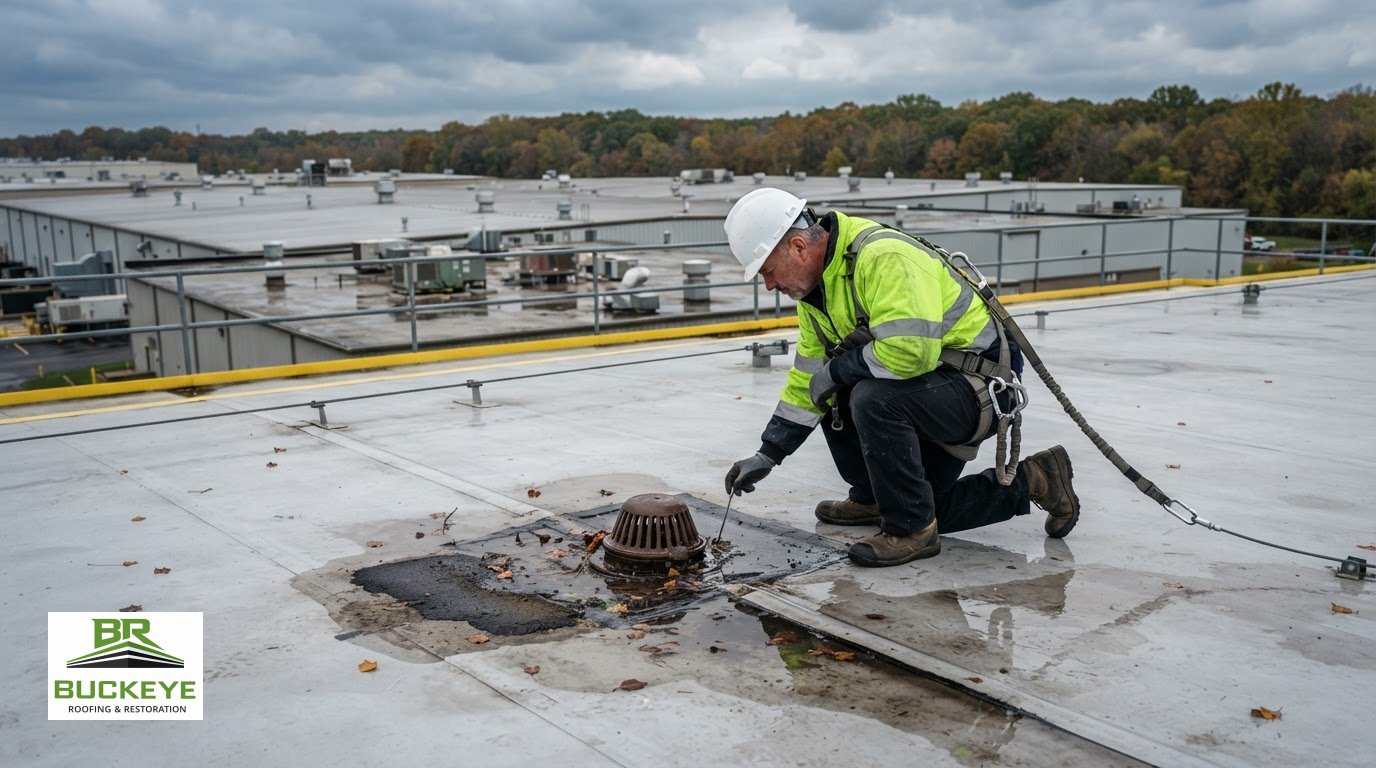
Monthly flat roof maintenance helps catch blocked drains, loose flashing, and early signs of leaks before they become larger problems. Check the roof monthly and after storms, and clear drains at least four times per year. Check them every month or two, with more frequent attention in fall.
That routine can feel like one more task on a busy facility schedule, but a brief, consistent check can help you spot changes early. This guide covers what to look for, when to call a roofing professional, and why repairs must match the existing roof system.
For commercial properties in Ohio, Northeast Indiana, and Southern Michigan, seasonal checks can account for fall debris, winter conditions, and spring thaw. Learn to recognize ponding, membrane and flashing damage, and when a recurring issue needs a closer professional assessment.
Key Takeaways
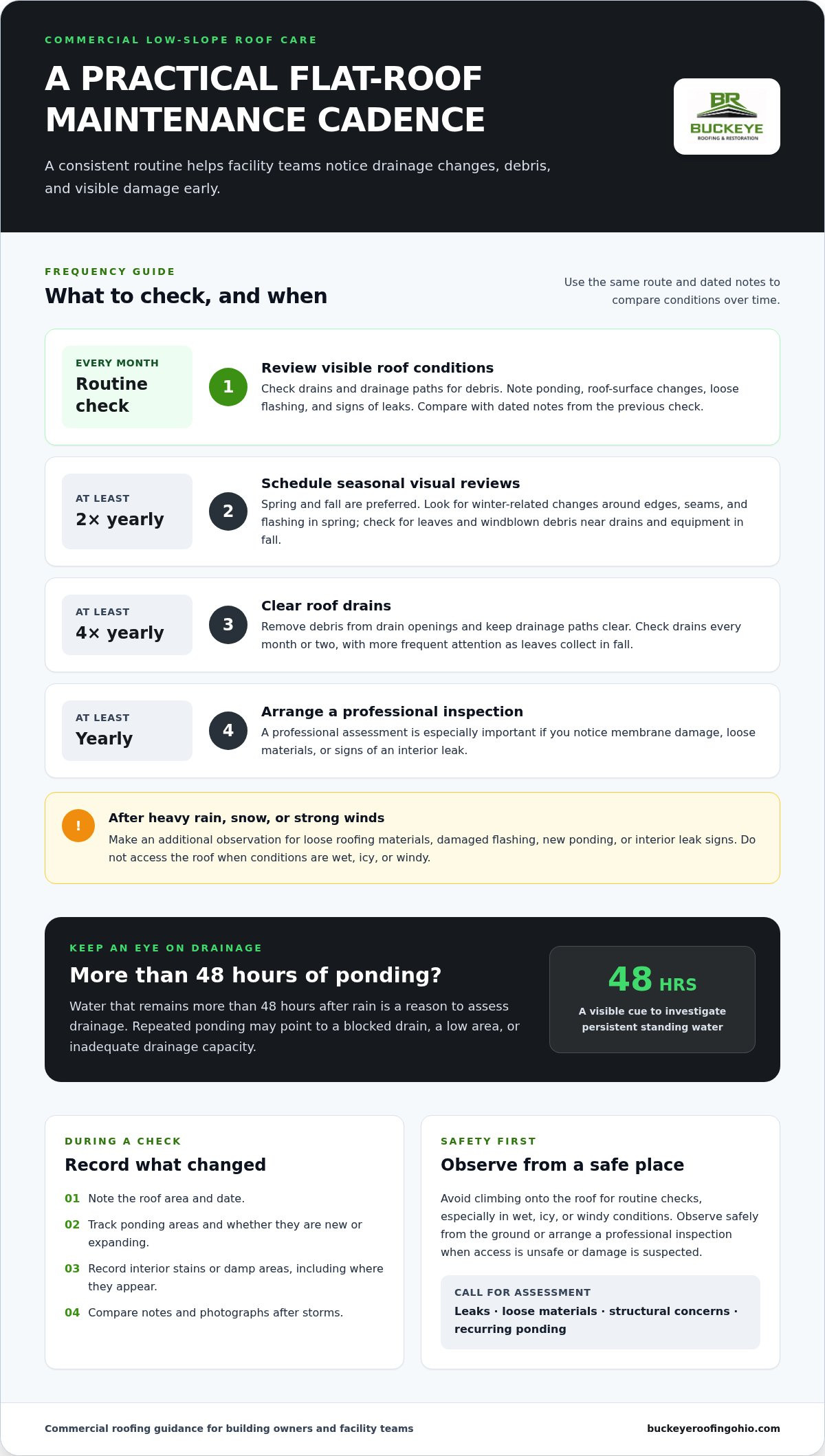
- Check roof drains monthly and clear them at least four times per year; watch for water that remains more than 48 hours after rain.
- Prepare Arizona roofs in April and May, monitor them during June-to-September monsoon storms, and inspect again in September and October.
- Remove debris routinely and keep drainage paths clear, especially when leaves and other material collect on the roof.
- Match repair materials to the existing roof system. TPO, EPDM, and modified bitumen require different repair approaches.
- Take note of ponding, open seams, blisters, ridges, or recurring leaks, and arrange a professional assessment when damage or unsafe access is involved.
1. Why Monthly Flat Roof Maintenance Matters in 2026?
A monthly check can catch blocked drains before water sits over vulnerable seams. Flat commercial roofs have a slight slope, but leaves, packaging, and dirt can still interrupt drainage. After rainfall, note where water remains and how long it stays. Water still ponding more than 48 hours after rain is a reason to assess drainage improvements.
Standing water puts ongoing stress on the roofing system and can damage its membrane over time. It can also reveal weaknesses around seams, roof edges, and equipment penetrations. Check the interior for useful clues, such as new ceiling stains or damp areas below known ponding locations. Record the roof area and date so you can compare findings next month.
Drainage may rely on roof drains, scuppers, or downspouts, and each route needs a clear path. Clear roof drains at least four times per year, and check them every month or two. In fall, inspect more often as leaves drop. A drain that looks open from a distance may still be partly blocked beneath its grate.
Use a consistent routine to catch small obstructions before they go unnoticed:
- Check drain openings, scuppers, and visible downspout outlets for leaves, trash, and loose material.
- Compare ponding areas with previous inspection notes; new or expanding pools can signal a drainage change.
- When drains are cleaned, clear downspouts with a garden hose from a safe access point.
- Keep debris away from drain openings, but don’t push it into the drain or scupper.
If water repeatedly remains beyond 48 hours, clearing debris alone may not solve the problem. Persistent ponding can point to blocked drainage, a low area, or inadequate drainage capacity. A professional can assess whether a drain, scupper, or downspout needs attention, or whether drainage correction is appropriate. Repeated ponding may require grading changes or additional drainage, rather than a coating over the same low area.
What safety precautions should homeowners take when maintaining a flat roof? Avoid climbing onto a roof for routine checks, especially in wet or windy conditions; observe safely from the ground or arrange a professional inspection. The National Institute for Occupational Safety and Health advises considering perimeter guardrails wherever feasible, so roof access and fall protection should be treated as serious safety concerns.
2. Seasonal roof inspections in Ohio, Northeast Indiana, and Southern Michigan
Use a calendar and a consistent inspection route for commercial roofs. Schedule visual reviews at least twice yearly, preferably in spring and fall, and arrange a professional inspection at least once a year. Monthly checks provide regular oversight, while storms call for additional observations. Dated notes help facility teams compare conditions instead of relying on memory.
In Ohio, Northeast Indiana, and Southern Michigan, seasonal checks should reflect changing weather. In spring, look for winter-related changes around roof edges, seams, and flashing. In fall, check for leaves or windblown debris near rooftop equipment and drainage areas. Note changes to the roof surface or interior, and add each finding to the building’s maintenance record.
After heavy rain, snow, or strong winds, look for loose roofing materials, damaged flashing, and signs of leaks. Record where water appears inside and whether new stains develop after a storm. Freeze-thaw cycles can stress roof details, while melting snow can reveal drainage problems. A ceiling stain may not be directly below the roof opening because water can travel beneath the membrane.
How often should a flat roof be inspected and maintained? Check it monthly and after storms or extreme weather, with visual inspections at least twice yearly in spring and fall. Schedule a professional inspection at least once a year, especially if you see membrane damage, loose materials, or signs of an interior leak.
Use the same checklist each month, observing from a safe vantage point:
- Look for new ceiling stains, damp patches, or water near rooftop equipment.
- Scan visible roof edges and penetrations for loose flashing or displaced materials.
- Record changes in the roof surface, seams, and debris near equipment.
- Compare dated notes and photographs after storms to identify new damage.
How do climate, snow, rain, and local building codes affect flat roof maintenance? Heavy rain and melting snow can reveal drainage issues, while freeze-thaw conditions can stress seams and flashing. Building codes and energy-efficiency standards inform insulation requirements; local weather also shapes what facility teams should watch between professional inspections.
Don’t climb onto a roof in wet, icy, or windy conditions. If access is unsafe, or a storm leaves loose materials, leaks, or structural concerns, arrange a professional assessment. Keep the roof plan, inspection notes, and interior leak locations together. These records help a roofing professional compare findings and plan work around the building’s operating schedule.
3. Debris removal and roof cleaning
Leaves, twigs, packaging, and windblown dirt can collect on low-slope commercial roofs. Because the surface has limited pitch, debris may stay in place instead of washing away. Buildup can hide cracks, seams, and other visible damage. It can also interfere with drainage and keep parts of the roofing system damp.
Set a regular cleaning schedule. Sweeping or blowing debris from the roof every two months is a practical interval; in Arizona, monthly clearing during dry months is recommended. Add a check after extreme weather, when wind can scatter branches or loose material across a roof. Increase attention in fall, as leaves accumulate near drains and roof edges.
Address vegetation promptly. Moss, algae, or other vegetation can grow in trapped dirt and may affect a roof’s condition. Note where growth appears, then have it removed using a method suited to the roofing material. Don’t pull firmly rooted vegetation by hand, as the force can damage a membrane or loosen a seam.
For commercial flat roofing, cleaning should protect the surface, not just make it look clear. A broom or blower can move loose debris, but sharp tools and aggressive scraping may puncture or abrade membranes. Avoid dragging branches or equipment across rubber roofing, including EPDM. Keep removed debris away from drains instead of pushing it into openings.
- Look for leaves and twigs around drains, scuppers, equipment, and roof edges.
- Check whether dirt is collecting in low spots or covering seams.
- Record vegetation, cracks, or loose material for comparison during the next inspection.
- Keep debris disposal separate from the roof, and leave drainage openings clear.
Roof cleaning also makes later inspections more useful. A clear surface lets an inspector see membrane seams, flashing, and coating wear without dirt obscuring them. If a coating is planned, the roof should be clean and necessary repairs completed first. Coating over debris or unresolved damage can leave the underlying issue in place.
Don’t climb onto a commercial roof just to sweep it if access, weather, or the surface creates a safety concern. From inside the building, note water stains or damp insulation. From a safe vantage point, document visible debris and plant growth. Arrange professional cleaning or inspection when debris is heavy, vegetation is rooted, or damage appears. This keeps maintenance focused on the roof’s condition and on cleaning methods suited to its material.
4. Flat roof system types and compatible repair materials
Repair materials must suit the existing roofing system. TPO, EPDM, modified bitumen, built-up roofing, and spray polyurethane foam have different surfaces and seams. A patch that bonds to one material may not adhere properly to another. Identify the roof type from maintenance records or a professional inspection before selecting repair products.
EPDM is a rubber membrane, while TPO is a thermoplastic membrane. Their seams use different methods: EPDM seams are adhesive-taped, and TPO seams are heat-welded. Modified bitumen uses asphalt-based layers, so its repair materials differ from those for single-ply membranes. Coatings are also system-specific, not universal patches for leaks or damaged roofing.
How should flat roof blisters, cracks, seams, and flashing be repaired? Blisters, membrane splits, cracked seams, and failed flashing need assessment and repair with materials compatible with the existing system. TPO repairs are best handled by a roofing professional, and large cracks or uncertain damage shouldn’t be patched with generic sealant.
Small defects can still point to a broader problem. A crack near a seam, for example, may reflect movement or stress beyond the visible opening. A puncture beside branches or displaced equipment may have damaged layers beneath the surface. Don’t cut open blisters, apply roofing cement, or use a bicycle-tire kit on a commercial roof. These fixes can worsen damage or interfere with a proper repair.
Instead, document the location from a safe vantage point. Note whether water appears inside, whether flashing looks loose, and which roofing materials are present. A professional can inspect the membrane, seams, insulation, and substrate before choosing a patch, targeted repair, restoration, or replacement. The right option depends on the extent of damage and the roof’s overall condition.
- Keep records identifying the membrane type and any previous repair materials.
- Photograph visible cracks, open seams, or flashing concerns without walking on an unsafe roof.
- Keep temporary coverings or unapproved sealants from concealing damage before inspection.
Commercial roof repair and maintenance needs vary with the system, damaged area, access, and any underlying moisture or substrate issues. A site assessment helps determine the work required. A localized patch addresses a specific defect, while restoration treats a roof that remains suitable for that work. Replacement may be appropriate when damage is extensive or the roof’s condition rules out repair or restoration. An inspection helps determine which approach fits the building, drainage, and existing roofing system.
5. Common damage and warning signs
A membrane can show damage before water reaches the occupied space. During a visual check from a safe vantage point, look for splits, punctures, open seams, loose flashing, or surface changes. Pay particular attention around HVAC units, skylights, roof edges, and other penetrations. These transition points rely on sealed details to keep water out.
Long cracks or splits may follow visible joints in the insulation. Freeze-thaw cycles, surface stress, or poor workmanship can contribute to this pattern. Cracks in seams deserve prompt attention, even when they look small. Water may move beneath the membrane before appearing indoors, so a ceiling stain may not be below the roof defect.
Blisters and ridges also need attention. A blister can form when trapped air separates layers of roofing felt. Ridges may develop when moisture condenses beneath the felt, often near insulation joints. Don’t cut or puncture these areas yourself. Opening them can cause further damage and won’t establish whether moisture has reached the insulation.
Weather can expose or worsen weak details. After heavy rain or strong winds, note loose materials, fresh ponding, new interior stains, or flashing that appears displaced. In colder regions, freeze-thaw cycles can stress seams and cracks. Record the location and date, then compare your notes with earlier inspections to distinguish new changes from existing conditions.
Watch for these signs from a safe location:
- Repeated leaks or new stains after rainfall, especially near roof penetrations.
- Membrane splits, open seams, loose flashing, or blisters that have changed.
- Discoloration on a spray polyurethane foam roof, which can indicate material deterioration.
- Persistent ponding beyond 48 hours, or visible sagging that raises structural concerns.
- Vegetation growth, which can compromise the waterproofing layer as roots develop.
One sign alone doesn’t determine whether repair or replacement makes sense. A professional assesses the membrane, seams, flashing, insulation, drainage, and extent of damage. Frequent leaks, extensive membrane damage, or structural concerns can mean replacement needs consideration. If the roof covering has exceeded its warranty period, include that information in the assessment. Warranty age alone doesn’t establish the roof’s full condition.
Don’t walk onto a wet, windy, or visibly damaged roof to investigate. Share dated observations and interior leak locations with a roofing professional. A focused commercial roof repair assessment can help identify the source and determine whether targeted repair is appropriate.
Buckeye Roofing & Restoration: Commercial Flat Roofing
Buckeye Roofing & Restoration helps commercial property owners address roof concerns with flat-roof inspections, repairs, restoration, and coatings. Contact the team when recurring leaks, damaged seams, or drainage issues need a closer assessment, or when you’re weighing repair against restoration.
An inspection helps identify the roof’s condition and a practical next step. A coating or restoration may suit some roofs, but the existing system, substrate, moisture, drainage, and structural condition all matter. If damage is extensive, a different solution may make more sense than a surface treatment.
For a commercial roof assessment or to discuss a repair, contact Buckeye Roofing & Restoration.
Make Roof Care Part of Facility Planning
Include roof findings in your facility’s work plan, not just an inspection file. When maintenance teams coordinate roof access with HVAC servicing, equipment moves, or other scheduled work, they can reduce avoidable roof traffic and keep responsibilities clear. Assign one person to track follow-up so a concern doesn’t disappear between shifts or budget cycles.
Consistent flat roof maintenance can help facility managers plan repairs around building operations. If a recurring issue affects a production area, tenant space, or warehouse schedule, include that impact when discussing next steps with a roofing professional. The goal is a practical plan based on the building’s needs, not a larger project by default.
For an experienced assessment of your commercial roof, contact Buckeye Roofing & Restoration. A clear next step can make roof care easier to manage, and help you move forward with confidence.
Frequently Asked Questions
Why Monthly Flat Roof Maintenance Matters in 2026?
Monthly checks give facility teams regular opportunities to catch changes before they disrupt building operations. A new stain above a production line, for example, deserves prompt documentation because it may point to a roof leak. A simple log with dates, weather conditions, affected rooms, and follow-up actions helps property managers compare findings and coordinate decisions with maintenance staff.
What are the steps for routine flat roof maintenance?
Start by reviewing previous inspection notes and occupant reports of leaks. Check for new interior staining, then observe the roof only from a safe access point or ground-level vantage. Record visible changes, such as displaced material or new plant growth, and mark the location on a roof plan. Assign follow-up to a specific facilities team member, then track whether the concern was assessed and addressed.
What signs of damage or leaks should you look for on a flat roof?
Inside the building, watch for fresh ceiling discoloration, damp patches, or water near roof-mounted equipment after rain. Document a recurring stain that returns after drying, even if it looks small. Outdoors, note changes around penetrations, roof edges, and seams. Record where the sign appears and whether it changes, since water can travel beneath a membrane before showing indoors.
How do you safely clean drains, gutters, and debris from a flat roof?
Don’t climb onto a commercial roof or use an unstable ladder to clear debris. From a safe ground-level position, check visible outlets and downspouts for obvious blockages. If roof access, a blocked drain, or accumulated material requires work at height, arrange qualified maintenance rather than attempting it yourself. Keep notes about the affected location so the person handling the work can find it efficiently.
What does flat roof maintenance cost in the United States?
There isn’t one standard price for commercial roof maintenance. The amount depends on the building and the work required, so pricing is determined case by case and provided after a quote request. A routine inspection differs from cleaning, leak investigation, membrane repairs, or restoration work. For an accurate estimate, describe the roof system, known concerns, access conditions, and any active leaks.
What factors affect flat roof maintenance costs and repair prices?
The scope of work, roof area, system type, access, and condition of underlying materials can all affect the work required. A localized membrane defect differs from repeated leaks involving several roof areas. Drainage issues, wet insulation, or damaged flashing may also change the scope. Sharing inspection records, repair history, and clear descriptions of leak locations helps assess the building’s needs.
How do maintenance needs differ for EPDM, TPO, PVC, and modified bitumen roofs?
Maintenance should suit the installed system, since seams and repair materials aren’t interchangeable. EPDM is a rubber membrane, while TPO and PVC are distinct single-ply systems; modified bitumen uses asphalt-based layers. A qualified roofer identifies the material and selects a compatible repair method. Keep installation or repair records available, especially if the roof has had earlier patches or coating work.
Does regular flat roof maintenance protect the roof warranty or insurance coverage?
Routine records can show what conditions were observed and what work followed, but maintenance alone doesn’t guarantee warranty protection or insurance coverage. The applicable terms depend on the specific warranty and policy. Keep inspection notes, dated photographs, repair documents, and reports of interior leaks together. Review those documents before authorizing work so the maintenance history and any stated requirements are clear.

Article by
Harry Stanley III
Harry Stanley III is a construction marketing strategist and fractional CMO at H&A Marketing. He has helped construction companies grow through website strategy, SEO, paid advertising, branding, lead generation, CRM systems, and professional content. His past work includes helping Meraki Solar generate an additional $3.7 million in revenue in his first year and supporting American Builders as a fractional CMO. Today, Harry works directly with custom home builders and construction companies to build marketing systems designed to generate qualified leads and measurable growth.