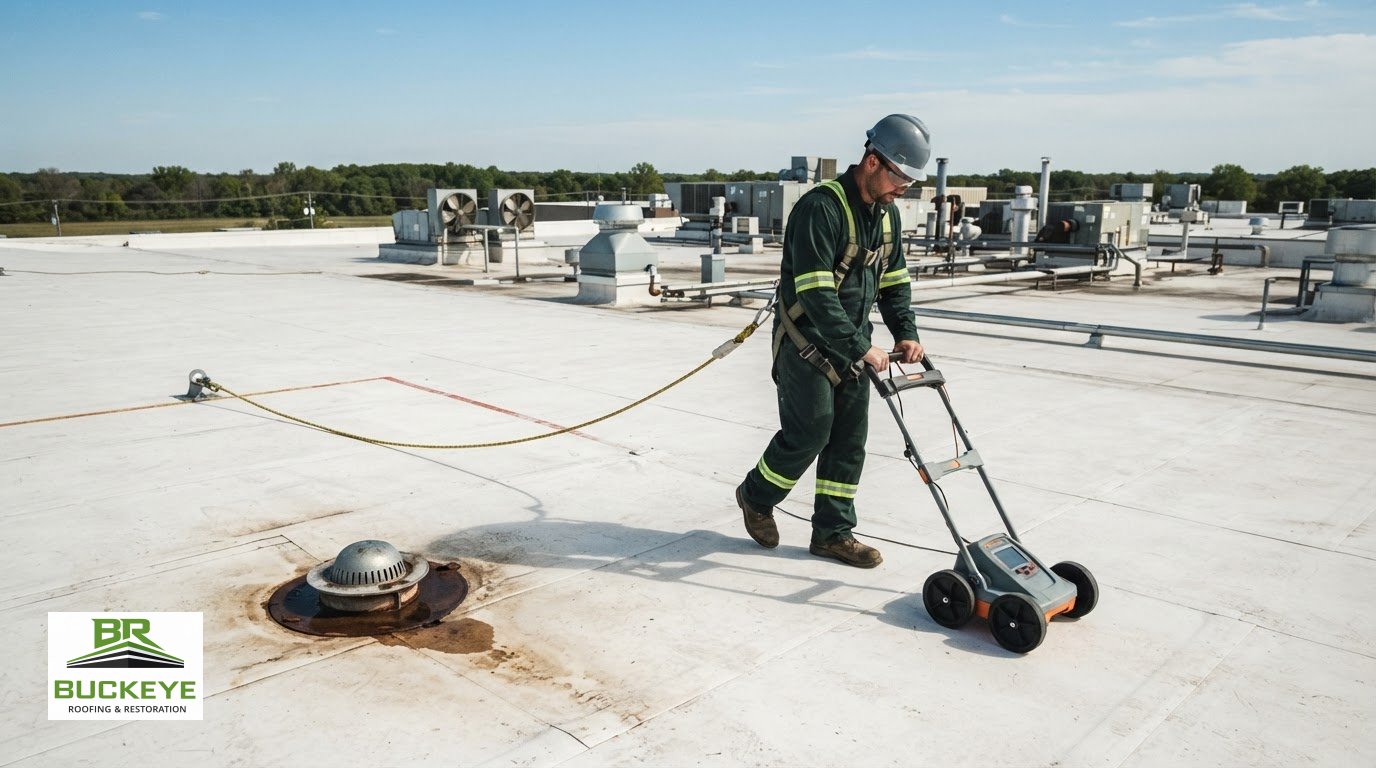
A roof leak in a manufacturing building can affect far more than the roof. It can put production areas, equipment, inventory, and daily operations at risk. Industrial flat roof repair in Elkhart, Indiana, starts with locating where moisture is entering and assessing drainage, then matching the repair to the building’s needs.
It’s reasonable to want a clear scope before work begins. The right fix may involve targeted repairs, improved waterproofing, or restoration, depending on the roof’s condition, moisture levels, drainage, and existing system. A customized estimate should reflect those findings rather than assume every facility needs the same work.
This article explains what a professional assessment covers, how repair planning can account for manufacturing and warehouse operations, and what shapes the recommended approach. You’ll also learn how restoration differs from replacement and what information helps define a scope for your facility.
Key Takeaways
- Moisture checks and drainage assessments help pinpoint whether a leak comes from a roof opening, trapped water, or a broader system issue.
- For manufacturing and warehouse buildings, repair planning should account for equipment, inventory, and the need to keep operations in mind.
- Repairs address specific damage, while restoration and coatings address broader roof conditions; inspection findings determine which approach fits.
- A useful estimate connects the observed roof conditions to the proposed work, including drainage, moisture, and the condition of the existing system.
- In Elkhart, seasonal weather can make drainage and freeze-thaw effects important considerations when assessing a low-slope roof.
Roof moisture and drainage assessment
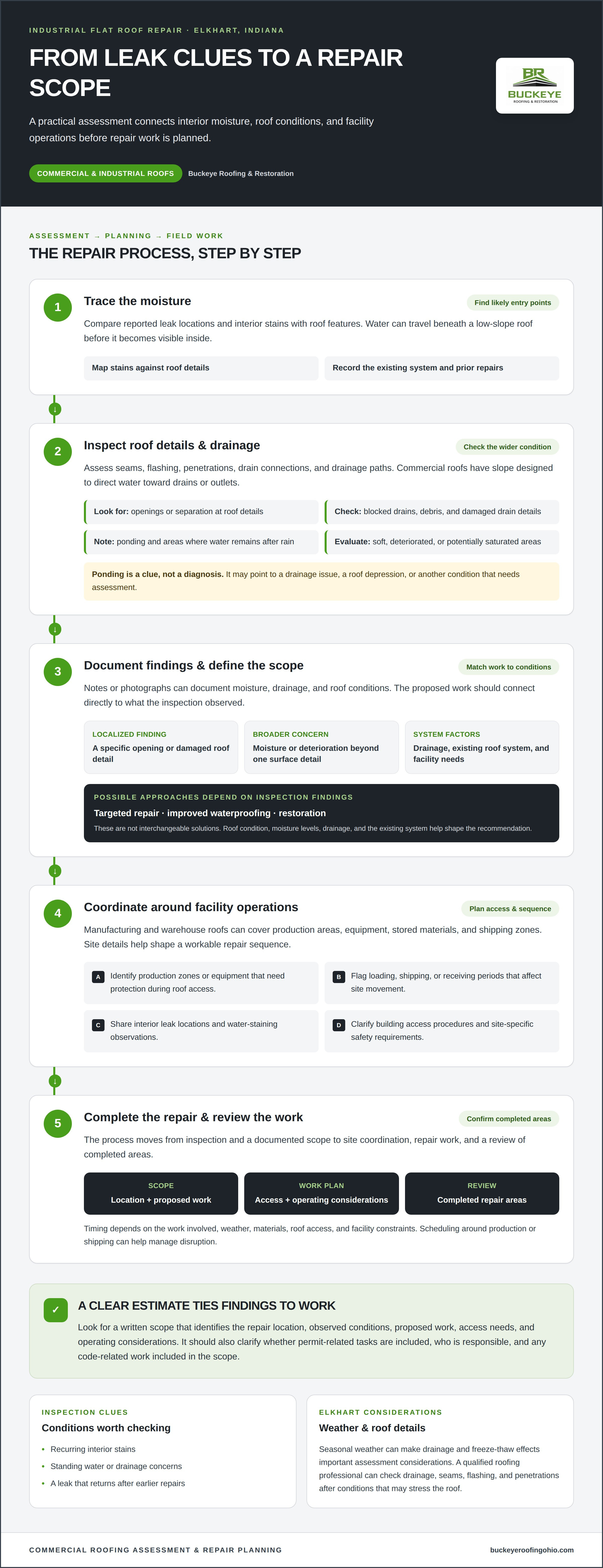
A sound assessment traces moisture rather than simply covering the visible stain. Water can travel beneath a low-slope roof before appearing inside an Elkhart facility. A roofer compares interior leak locations with roof seams, penetrations, drains, and transitions. This helps distinguish the entry point from where water becomes visible. The inspection also documents the roof system and previous repairs.
Drainage deserves a close, separate look. Commercial roofs have slope, even when the surface appears flat, and water should flow toward designed drains or outlets. A roofer checks for blocked drains, debris, damaged drain details, and areas where water remains after rainfall. Ponding may indicate a drainage issue, a roof depression, or another condition requiring assessment. It does not reveal the cause on its own.
During a professional assessment, the roofer may:
- Map interior stains against roof features and reported leak locations.
- Inspect seams, flashing, penetrations, and drain connections for openings or separation.
- Look for soft, deteriorated, or saturated areas that may require closer evaluation.
- Document ponding, drainage paths, and roof conditions with notes or photographs.
Moisture findings matter because a surface repair can miss damage beneath the membrane. Inspection results help define the affected area and determine whether the repair should address one detail or a wider section. For example, a leak near a rooftop unit may involve its flashing, nearby seams, or water coming from elsewhere. A careful diagnosis ties the proposed scope to observed conditions.
When choosing a commercial flat roof repair contractor in Elkhart, look for someone who explains the inspection findings, identifies likely entry points, and links each proposed repair to a specific condition. Request a written scope that describes the work, access needs, and operating considerations.
For Indiana building codes and permits, the estimate should clarify whether permit-related tasks are included and who is responsible for them. It should also identify any code-related work included in the scope, so responsibilities are clear.
The repair process typically moves from inspection and a documented scope to site coordination, repair work, and a review of completed areas. Timing depends on the work involved, weather, materials, roof access, and facility constraints. Scheduling around production or shipping can help manage disruption.
Delaying a repair can allow moisture to affect more roofing material or interior space. In an industrial building, water may reach stored inventory, equipment, or work areas.
For Indiana weather, have a qualified roofing professional check drainage, seams, flashing, and penetrations after conditions that may stress the roof. Schedule an inspection if staff in Elkhart notice recurring interior stains, standing water, or a leak that returns after earlier repairs.
Roofing for industrial and manufacturing facilities
A manufacturing roof protects more than the building from weather. It covers production lines, electrical systems, stored materials, and shipping areas. A leak above a control panel raises different concerns from one above an unused storage bay. Repair planning should account for what lies beneath the roof and how each area is used.
According to Green Improvements, a leaking commercial roof can contribute to production downtime, equipment damage, inventory loss, interior water damage, electrical or fire hazards, mold growth, and safety concerns. These potential effects make accurate leak tracing and clear work coordination important. For example, a repair near an active production line may require planned access and communication with facility staff.
Industrial buildings also differ in layout. A warehouse may have long roof runs and loading areas, while a manufacturing facility may have rooftop exhaust equipment, piping, or multiple penetrations. These features can shape inspection access, repair sequencing, and material compatibility. The existing roof system matters; not every low-slope roof is the same.
When considering roofing materials for industrial flat roofs in northern Indiana, the building and existing roof help guide the choice. TPO and EPDM are distinct roofing systems, and neither should be selected by name alone. A professional considers roof condition, drainage, facility use, climate exposure, and compatibility before recommending a material or repair approach.
Before work begins, facility teams can help the roofer plan around operations by identifying:
- Production zones or equipment that need protection during roof access.
- Loading, shipping, or receiving periods that affect site movement.
- Interior areas where staff have observed leaks or water staining.
- Building access procedures and any site-specific safety requirements.
These details help define a practical work sequence and distinguish roof work from facility tasks, such as moving sensitive inventory away from an affected area. A written scope should identify the repair location, proposed work, and any coordination needed for operations. For facilities with separate production and warehouse areas, clear location details help prevent scheduling confusion.
For Elkhart, Indiana roofing contractor licensing, insurance, and warranties, requirements and terms depend on the project and applicable authorities. The written proposal should identify permit responsibilities, provide relevant insurance documentation, and state warranty coverage and limits without implying terms beyond the agreement.
When a leak affects operations, a documented commercial roof repair scope can connect the observed condition to the planned work. That gives facility managers a clearer basis for coordinating access and evaluating how the proposed repair fits the building.
the repair location, the work proposed, and any operating coordination needed. For larger sites, documenting roof areas and drainage conditions can help focus future maintenance. Immanuel Lutheren Church has a facility with over 55,000 square feet of roof to cover, illustrating the scale roof planning may involve. Hochstetler Roofing says clogged roof drains under rooftop solar panels can contribute to standing water and rust staining that shorten roof life. Where panels are present, facility teams can include drain access and visible drainage concerns in roof discussions, so maintenance planning considers conditions around rooftop equipment as well as the roof surface.
Waterproofing and roof restoration
Waterproofing work should match the roof’s actual condition. A repair addresses a specific defect, such as an open seam or damaged flashing. Restoration treats a broader roof surface or system to improve its protective condition. A coating is one restoration approach, not a substitute for every repair. For example, sealing one failed penetration on an Elkhart warehouse will not correct widespread membrane deterioration.
Before recommending restoration, a roofer evaluates the existing roof surface, substrate, moisture, drainage, and structural condition. The substrate is the material beneath the visible roof layer. If moisture has reached it, covering the roof may leave the underlying problem unresolved. Drainage matters too: a coating alone cannot correct a roof depression or blocked outlet. Inspection findings determine whether preparation, localized repairs, or other work must come first.
A restoration plan should identify the system being treated and explain how the work addresses observed conditions. It should distinguish surface preparation from repairs to seams, penetrations, and flashing. For example, a roof with sound areas and several isolated defects may need specific repairs before a coating is considered. Widespread deterioration or compromised underlying materials may require a different scope.
Commercial roof restoration generally involves a defined sequence:
- Inspect the existing roof, including its surface, transitions, and details.
- Assess moisture and drainage findings before selecting a restoration approach.
- Prepare the surface and address defects included in the work scope.
- Apply restoration materials suited to the existing roof system.
- Review completed areas against the agreed scope and site conditions.
Pay close attention to waterproofing details around rooftop equipment, wall transitions, drains, and penetrations. A membrane may be intact across an open area while a connection at one of these details has failed. The repair scope should name the detail and the corrective work proposed. This clarity helps facility managers understand what restoration covers and what it does not.
Borntrager Inc. describes a roof recover as adding a new layer over the existing roof as an alternative to full replacement. A recover differs from a coating, which is applied as a protective layer rather than a new roofing layer. The existing roof’s condition and applicable project requirements determine whether either approach is suitable.
For industrial flat roof repair versus replacement, targeted repairs suit localized damage when the surrounding materials remain serviceable. Replacement may be considered when deterioration is widespread or the existing system cannot provide a sound base for restoration. An inspection should support the decision with documented roof conditions, not assumptions based on a leak alone.
Choosing among repair, restoration, and replacement means matching the scope to the roof’s observed condition and project requirements. A clear explanation of findings and proposed work is useful when comparing options. The decision should reflect the inspection, not treat a coating or recover as a universal solution.
Customized repair estimates
A useful estimate links each proposed task to a specific roof condition. For example, a leak near a rooftop unit may require work on its flashing, nearby membrane, or both. The estimate should identify the area, describe the repair, and explain what it addresses. This helps a facility manager compare the scope with the reported leak and inspection findings.
Scope affects the estimate more than a broad label such as “roof repair.” A localized seam repair differs from work involving several penetrations, deteriorated membrane, or difficult access. The roofer also considers the existing roof system, affected materials, drainage details, and whether hidden moisture changes the work. These factors help explain why two Elkhart facilities with similar leaks may need different scopes.
A clear estimate commonly identifies:
- The roof areas and details included in the proposed work.
- The repair method and materials suited to the existing system.
- Access conditions, equipment, and facility coordination needs.
- Any assumptions, exclusions, or conditions that could change the scope.
These details matter in an active industrial facility. A repair near a loading area may require coordination around deliveries, while work above production equipment may need additional planning. Including these conditions helps the facility team understand how the work will be carried out. It also distinguishes roofing tasks from site coordination, such as arranging access or protecting nearby operations.
The estimate should distinguish immediate repairs from optional or broader work. If inspection findings show one failed flashing detail, the scope should not combine it with unrelated roof improvements. If the roofer finds multiple damaged areas, each should be described clearly. Facility managers can then see what the repair addresses now and what falls outside the proposed work.
The estimate depends on the roof’s condition, repair area, materials, access, and scope, and is provided after a quote request. A tailored estimate uses those project details rather than a generic figure. For instance, a small repair with straightforward access differs from work around rooftop equipment or multiple roof transitions.
Before approving work, compare the written scope with the inspection findings and the facility’s known leak locations. Ask for unclear terms to be explained in plain language, especially where the estimate refers to an existing membrane, flashing, or drainage detail. A professional commercial roof repair estimate should make the proposed work understandable without promising that unrelated roof conditions are included.
Common industrial flat roof problems in Elkhart, Indiana
Industrial roofs in Elkhart have several recurring trouble spots. Low-slope systems rely on seams, flashing, drains, and penetrations to keep water out. Damage at one detail can cause an interior leak even when the surrounding roof surface appears intact. A facility manager may first notice a ceiling stain near equipment or a recurring drip after rain.
Open or weakened seams are one possible source. Wind, aging materials, or earlier work can leave a seam vulnerable. A leak may appear far from the opening because water can travel beneath the roof layer. A roofer traces the reported leak and checks nearby seams before choosing a repair.
Flashing problems often occur where the roof meets a wall, curb, or rooftop unit. For example, a gap around an exhaust curb can let water in during rain. Sealant condition alone does not explain every leak; the flashing detail and adjacent roofing materials also need assessment. Changes to rooftop equipment can create additional transitions to inspect.
Drainage problems can leave water standing in low areas. Debris at an outlet or a damaged drain connection may slow runoff. Ponding can also point to a depression or drainage design concern. A professional inspection can distinguish these conditions and identify whether the roof surface, drain detail, or another factor needs attention.
Elkhart’s seasonal changes make regular roof monitoring worthwhile. Freeze-thaw cycles can stress vulnerable seams and details as water freezes and melts. Snow and ice can also complicate drainage around roof edges and drains. After winter, interior stains or damp spots may reveal a problem that wasn’t visible from the ground.
Industrial roofs can also be damaged by routine building activity. A dropped tool, equipment service, or repeated foot traffic can harm the membrane. Loose or damaged materials near service routes need professional attention. Staff should report visible signs indoors, such as new staining or dripping, rather than going onto the roof to investigate.
Recurring leaks call for a broader review. If the same area leaks after earlier work, the cause may be an overlooked roof detail, water traveling from elsewhere, or a repair that addressed only part of the problem. A roofer can compare leak locations, previous repair records, and roof conditions to define a more complete scope.
Watch for these signs inside the facility:
- New or expanding ceiling stains near production or storage areas.
- Water appearing after rain, snowmelt, or changing temperatures.
- Repeated leaks around rooftop equipment or wall transitions.
- Damp materials, peeling finishes, or water near electrical equipment.
Keep staff away from unsafe roof access and report active leaks promptly. To discuss recurring signs or arrange a professional assessment, request a commercial roof inspection.
Buckeye Roofing & Restoration
Buckeye Roofing & Restoration helps commercial and industrial property owners assess flat-roof problems and plan practical next steps. For facilities in Elkhart, Indiana, an inspection can clarify whether targeted repair, restoration, or coatings suit the roof’s condition. Recommendations depend on findings such as moisture, drainage, substrate condition, and the existing roofing system.
For a manufacturing plant or warehouse, an assessment also helps define a repair scope around building use and operating needs. Not every leak calls for replacement; restoration or coatings are suitable when the roof’s condition supports them.
To discuss a roof concern or arrange an inspection, contact Buckeye Roofing & Restoration.
Set a Clear Next Step for Your Facility
Include roof planning in your facility’s routine capital review. Keep inspection findings and repair documentation with the building’s maintenance records so they can inform future decisions.
For commercial properties, the next decision can focus on which work belongs in the current maintenance plan and which items need separate review. Explore commercial roofing options as you plan the next step for your facility.
A measured plan gives your team a practical way to move forward with confidence.
Frequently Asked Questions
Who handles industrial flat roof repair in Elkhart, Indiana?
Buckeye Roofing & Restoration serves commercial properties in Elkhart, including industrial and manufacturing facilities. For an initial discussion, useful details include the building’s address, roof system if known, and facility type. This frames the request around the property and its use. If the facility has multiple buildings, identify which one needs attention so the roofing concern is tied to the right location.
What is the industrial flat roof repair cost per square foot in Elkhart, Indiana?
There isn’t one reliable per-square-foot figure for every industrial roof repair. An estimate is provided after a quote request and depends on the project. Some repairs address a small roof detail rather than a broad measured area, so square footage alone may not describe the work. The estimate should explain the repair scope and basis for the proposed work, giving facility managers useful information to review.
What factors affect commercial flat roof repair estimates?
For a property portfolio, estimate formatting can affect how easily managers review and approve work. Separate scopes by building or roof area make it clearer which locations need attention and which tasks apply to each. Facility teams can also identify internal approval or documentation requirements before the proposal is prepared. This keeps a multi-building review organized without assuming every roof needs the same repairs.

Article by
Harry Stanley III
Harry Stanley III is a construction marketing strategist and fractional CMO at H&A Marketing. He has helped construction companies grow through website strategy, SEO, paid advertising, branding, lead generation, CRM systems, and professional content. His past work includes helping Meraki Solar generate an additional $3.7 million in revenue in his first year and supporting American Builders as a fractional CMO. Today, Harry works directly with custom home builders and construction companies to build marketing systems designed to generate qualified leads and measurable growth.