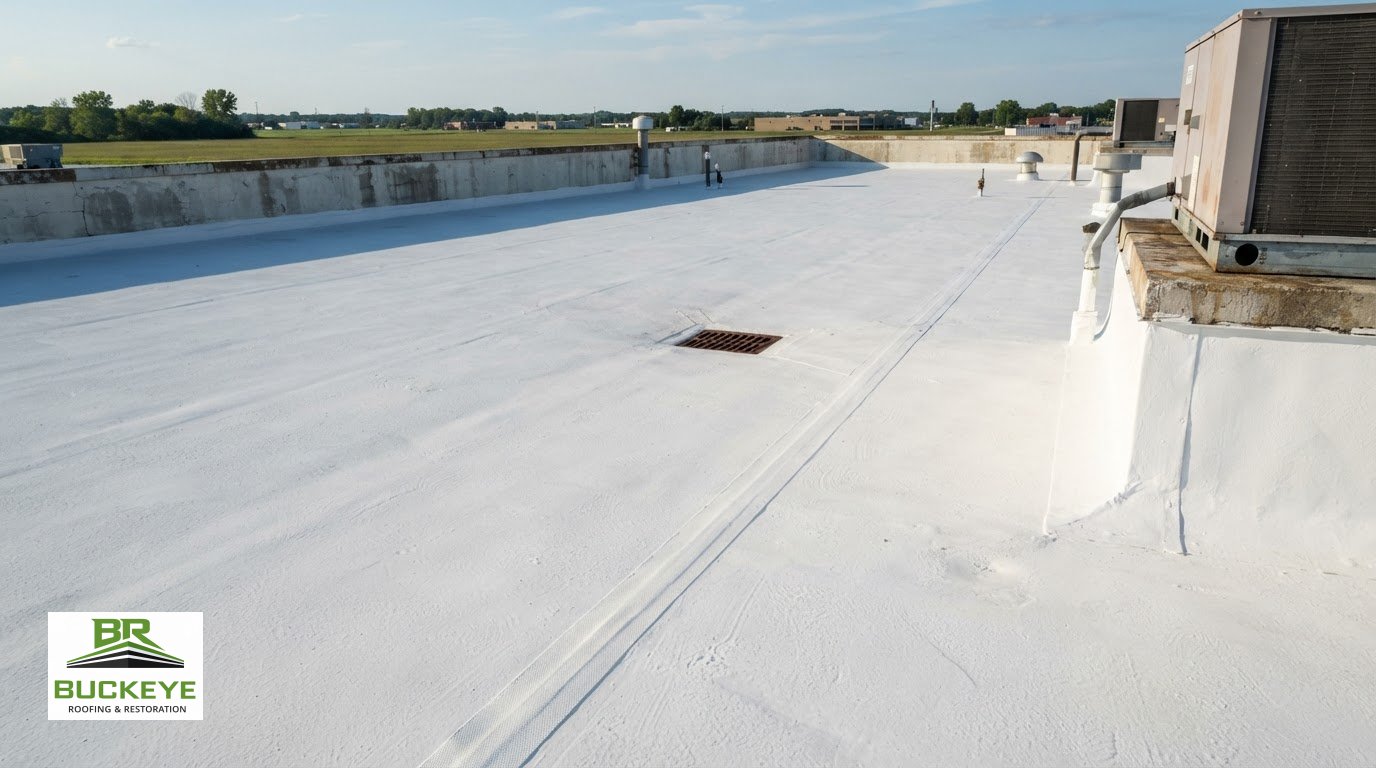
A leaking commercial roof doesn’t automatically need replacement. Low-slope roof restoration in Perrysburg, Ohio, can be a practical option when the existing roof is suitable, but it isn’t right for every building. Roof condition, substrate, moisture, drainage, and structural integrity all affect whether restoration makes sense.
Before committing to a major roofing project, it helps to know where to start. This guide explains what restoration involves, how it differs from repair and replacement, and what a professional evaluates before recommending a solution. You’ll also learn how commercial roofing experience, customer reviews, and low-slope services can help you assess options for a Perrysburg property.
Key Takeaways
- Learn how repair, restoration, and replacement address different roof conditions, and why an inspection helps determine the right approach.
- See how drainage, freeze-thaw conditions, and the needs of commercial buildings shape roofing decisions in the Perrysburg area.
- Use practical criteria to assess a contractor’s service area, credentials, and claims about past work.
- Understand what professionals evaluate when deciding whether a low-slope roof is a candidate for restoration or coating.
- Find out how Buckeye Roofing & Restoration’s commercial roofing services can help you plan a sensible next step.
Commercial Flat-Roof Repair, Restoration, and Replacement
An inspection can distinguish a localized defect from broader roof-system wear. Its findings help determine whether targeted repair, restoration, or replacement best fits the building.
Repair and Restoration Services
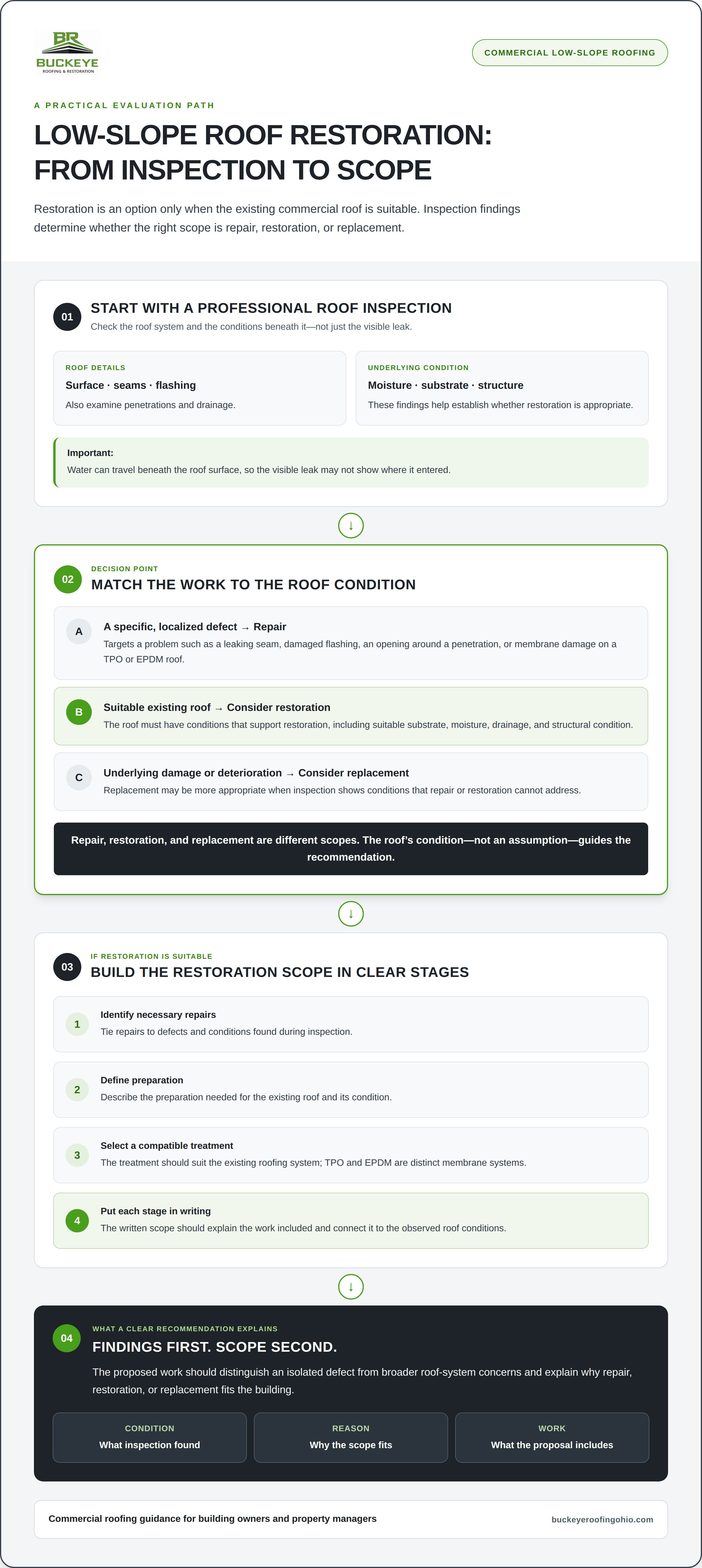
Commercial roof repair addresses a specific problem, such as a leaking seam, damaged flashing, or an opening around a roof penetration. Repairs may also address membrane damage on TPO or EPDM systems. Restoration takes a broader approach: suitable defects are corrected before a compatible coating or treatment is applied. Because water can travel beneath the roof surface, the visible leak may not show where it entered.
Restoration Versus Replacement
Low-slope roof restoration may suit a roof that remains structurally sound and has substrate, moisture, and drainage conditions that support restoration. Replacement is more appropriate when inspection shows underlying damage or deterioration that repair or restoration cannot address. Neither option should be assumed in advance; the roof’s condition determines the right scope.
Repair addresses a specific defect, restoration renews an eligible existing roof, and replacement installs a new roofing system. These are distinct scopes, not interchangeable labels. A proposal should connect the recommended work to observed conditions and explain why it suits the building.
Low-Slope Restoration Steps
A professional inspects the roof surface, seams, flashing, penetrations, drainage, and signs of moisture, as well as the substrate and structural condition. If restoration is suitable, the roofer identifies necessary repairs and preparation, then selects a treatment compatible with the existing system. The written scope should clearly describe each stage of the work.
What local building permits or code requirements apply to roof restoration in Perrysburg, Ohio? There isn’t one permit answer for every roof project. The City of Perrysburg’s review depends on the proposed scope, so confirm requirements with the city’s building department before work begins, especially if the project changes the existing roof assembly.
Restoration quality depends on matching preparation and repairs to inspection findings. The scope should identify what defects need correction and why the roof is eligible. Reviewing a contractor’s commercial roof restoration approach can help clarify how the proposed work relates to the existing roof.
Commercial Roofing Services in Perrysburg
Commercial roofs in Perrysburg serve warehouses, manufacturing facilities, offices, and retail properties. Maintenance and project needs vary with roof design, drainage, building use, and existing materials.
Commercial Roofing Service Areas
For a building in Perrysburg or nearby Maumee, confirm that the service covers the property and its commercial roof type. Coverage matters for inspections, leak diagnosis, planned restoration, and replacement. Northwest Ohio weather also makes drainage and changing roof conditions important to project planning. A useful service-area description names the communities served and the commercial work provided there.
Location is only one part of planning. Share the building address, roof type if known, and the concern, such as recurring interior stains or water noticed inside. These details help focus the inspection and clarify the likely project scope without assuming every roof needs the same work.
Contractor Profile and Specialization
A contractor profile should describe commercial roofing work and relevant low-slope systems. Experience with membrane seams, roof penetrations, flashing, and drainage, for example, is more relevant to a commercial flat roof than a broad roofing claim. Building owners can also review documented examples involving similar building types, while remembering that every roof has its own conditions.
Look for an explanation that connects inspection findings to the recommendation. A clear assessment distinguishes an isolated defect from a broader concern and explains how that affects the project scope. For a warehouse or manufacturing facility, planning should also account for access and ongoing operations.
Roofing Services and Products
Commercial roofing work can include leak repair, inspection, maintenance, restoration, coatings, and replacement. TPO and EPDM are distinct membrane systems, not interchangeable products. The right approach depends on the existing roof, substrate, moisture, drainage, building use, and inspection findings. A coating does not replace repairs needed to address underlying damage.
An estimate should identify the areas and tasks included. A problem at a membrane seam, for example, may need a different scope from widespread surface deterioration. Clear details help property managers understand the proposed work and how it relates to the roof, rather than relying on a product label alone.
Consultations, Estimates, Timing, and Warranties
Restoration timing depends on project scope, roof preparation, repairs, access, and application weather. A consultation can clarify how these factors affect scheduling. For warranties, rely only on coverage expressly stated in the project documents; don’t assume warranty terms based on the roofing system or restoration method.
A useful estimate identifies the recommended work and the conditions shaping its scope. Property managers can share the building location, known roof system, and observed concerns to focus the discussion. Written project details help clarify what’s included, how timing is planned, and what coverage, if any, is expressly documented.
Many TPO and EPDM roofs in the Maumee-Perrysburg area are reaching the 15-25-year window when freeze-thaw seam stress and UV degradation can begin producing leaks. The company offers bi-annual commercial roof inspection programs; property owners can ask whether a program suits their building and its roof conditions.
Choosing a Commercial Roofing Contractor for Perrysburg Properties
Start with the property’s location, roof type, and project scope. A contractor serving Perrysburg should explain how its coverage applies to your commercial building and proposed work. This matters when arranging an inspection, planning restoration, or assessing storm damage. The proposal should identify the property and describe the work under consideration.
Next, assess the contractor’s service-area claims. Perrysburg is in Northwest Ohio, near Maumee and Toledo. Distinguish a stated Northwest Ohio service area from broader statewide coverage or claims about Northeast Ohio. Confirm whether the company serves commercial properties at your location and handles the specific work needed.
Customer reviews can add useful context when they describe an actual commercial roofing experience. Look for details about communication, explanations of the work, and building types or roofing issues relevant to yours. A star rating alone says little about project scope. Reviews are one input, not a substitute for a roof-specific proposal.
Compare reviews with available project records. Documented commercial roofing projects can show the types of work a contractor handles. Check whether examples relate to commercial properties and the proposed work, but don’t assume another building had the same roof conditions or needed the same solution.
Use these practical criteria when reviewing a proposal:
- The inspection findings connect clearly to the recommended work.
- The scope identifies the roof areas and tasks included.
- Customer reviews describe specific communication or project experiences.
- Project examples relate to commercial roofing and the proposed scope.
- The service-area statement includes the Perrysburg property.
Credentials need context, too. Review documents supplied for the project and note the credential name, issuing organization, and relevance to the work. A broad claim doesn’t prove a specific certification or manufacturer relationship. The proposal should identify the responsible company and define the agreed scope.
Finally, look for a recommendation with clear reasoning. If restoration is proposed, the contractor should connect it to inspection findings. If replacement is recommended, the explanation should address why a narrower scope wouldn’t meet the building’s needs. Clear reasoning helps owners consider reviews, project examples, and the written proposal together.
Flat and Low-Slope Roofs: Systems, Drainage, and Restoration
Commercial low-slope roofs have a slight pitch that directs water toward drains or roof edges. EPDM, TPO, PVC, and modified bitumen may be candidates for restoration, depending on condition and material compatibility. For building owners considering low-slope roof restoration in Perrysburg, Ohio, the existing roof assembly is the starting point for evaluating the work.
Flat and Low-Slope Roof Types
“Flat roof” describes a roof with little visible pitch, not a surface designed to hold water. A commercial roof’s slope guides runoff toward drains, scuppers, or edges. During an inspection, a roofer examines drainage paths, seams, flashing, penetrations, and areas where water collects. These details help show whether the drainage design is working as intended.
Drainage deserves particular attention on Perrysburg buildings. Leaves, debris, damaged drains, or uneven areas can slow runoff and leave standing water. Facility managers may notice interior stains or recurring leaks after wet weather, but should avoid climbing onto the roof. A professional can inspect the drainage system and determine whether ponding relates to a blockage, roof condition, or broader design concern.
Restoration planning also considers how the roof serves the building. A warehouse, office, and manufacturing facility may have different access needs, rooftop equipment, and operating schedules. These factors affect inspection access and work planning. The existing assembly remains central: a coating or restoration layer must suit the substrate and address relevant defects, not conceal unresolved problems.
Restorable Roofing Materials
EPDM, TPO, PVC, and modified bitumen are distinct roofing systems, each requiring a compatible restoration approach. Their presence alone doesn’t mean restoration is suitable. A roofer examines the surface, seams, flashing, existing repairs, and signs of moisture before considering a coating or other treatment. The inspection should link proposed materials to the actual roof assembly.
For example, EPDM and TPO membranes have different material characteristics, so a method suited to one shouldn’t automatically be used on the other. PVC and modified bitumen also need system-specific assessment. Substrate, moisture levels, drainage, and structural integrity all affect eligibility. If trapped moisture or extensive deterioration is present, coating the surface won’t resolve the underlying condition.
In Perrysburg, freeze-thaw cycles, snow, and ice make drainage and surface condition important inspection points. A professional evaluates whether water can leave the roof and whether seams, edges, and penetrations remain sound. Low-slope roof restoration in Perrysburg, Ohio, should be based on these findings, not just the roof material. The written scope should identify the areas, repairs, preparation, and materials included.
Maumee and Perrysburg, many commercial flat roofs were installed within the last 25 years. That timeframe offers context, not a verdict on restoration eligibility: the roof’s actual assembly and condition remain central. An inspection can assess moisture, drainage, seams, flashing, and structural integrity, then determine whether proposed work suits the existing system. Installation age alone should not be treated as proof that a coating will address defects or that restoration is appropriate.
How to Evaluate Low-Slope Roof Restoration Contractors in Perrysburg
For a Perrysburg commercial building, consider roofers who specifically handle low-slope restoration. Evaluate their service area, inspection process, relevant experience, and written scope. A clear recommendation connects the roof’s observed condition to the proposed work instead of treating restoration as the automatic answer.
Start with geography. Ask whether the contractor serves commercial properties in Perrysburg and nearby Northwest Ohio communities, and whether that coverage includes inspections and restoration. The proposal should identify the building location and planned work. A broad regional claim alone doesn’t explain who will assess the roof or what the project includes.
Next, look for relevant commercial roofing experience. A useful profile names the systems and work handled, such as TPO or EPDM roof restoration, rather than relying on general roofing language. Project records can help illustrate that work. A documented commercial restoration project, for instance, is more relevant than an unrelated roofing job.
Use these practical criteria when reviewing a proposal:
- The inspection describes roof conditions and areas of concern.
- The recommendation explains why restoration fits the findings.
- The scope identifies preparation, repairs, and proposed treatment.
- The contractor’s documented work relates to commercial roofs.
- The service-area statement clearly includes the Perrysburg property.
Credentials also need context. Review any documentation provided and note the issuing organization, credential name, and stated relevance to the project. Don’t assume a general claim proves a specific certification or manufacturer relationship. The proposal should identify which company is responsible for the inspection and work, along with the agreed scope.
Ask how the inspection assesses moisture, substrate condition, drainage, and structural integrity. These findings affect whether restoration is appropriate. A roof with unresolved moisture or significant underlying damage may need another solution. A sound recommendation explains how each finding supports the selected approach, including repair or replacement when restoration isn’t suitable.
Finally, compare the written scope with the inspection findings, not just the proposed treatment. Commercial roofing project records can show the types of work a contractor documents, though each roof still needs its own assessment. For a Perrysburg facility, clear records and a roof-specific explanation make the decision more practical.
Buckeye Roofing & Restoration
Buckeye Roofing & Restoration helps commercial property owners assess low-slope roof concerns and choose a practical path forward. Its commercial services include flat-roof inspections, repairs, restoration, and coatings. For a Perrysburg building, the useful first step is understanding the roof’s condition, not assuming restoration or replacement is automatically necessary.
An inspection considers the roof surface, seams, flashing, penetrations, drainage, moisture, substrate, and structural condition. The findings help determine whether localized repair can address a specific problem or broader restoration is worth considering. Coatings don’t replace corrections to underlying damage, and not every roof is suitable for restoration.
For commercial properties, Buckeye provides flat-roof repairs when an inspection identifies defects that need attention. Building owners can report recurring leaks, visible interior stains, or standing water observed from a safe location. The assessment connects these concerns to roof conditions and helps determine whether repair, restoration, or replacement is the appropriate scope.
Restoration and coatings are options when the existing roof’s condition supports that approach. The evaluation considers the substrate, moisture, drainage, structural integrity, roof system, and building needs. If findings point elsewhere, another roofing solution may be more suitable. A clear scope explains the recommended work and the reasons behind it.
Buckeye serves commercial properties across Northwest Ohio, including Perrysburg, as well as nearby markets in Northeast Indiana and Southern Michigan. The company also provides commercial roofing services throughout Ohio. Property managers can share the building location, known roof system, and observed issue when arranging a commercial roof inspection. This context helps focus the assessment on the property and its needs.
The service options relevant to a commercial low-slope roof include:
- Commercial flat roofing for low-slope building systems.
- Commercial flat-roof repair for identified roof defects.
- Commercial roof restoration when inspection findings support it.
- Commercial roof coatings as part of an appropriate restoration plan.
Restoration depends on inspection findings, including moisture, drainage, substrate, and structural condition. Buckeye Roofing & Restoration can assess the roof and explain which approach fits the building. To discuss an inspection for your Perrysburg property, contact Buckeye Roofing & Restoration.
Frequently Asked Questions
What low-slope roof restoration services are available in Perrysburg, Ohio?
Commercial property owners in Perrysburg can get roof inspections, leak repairs, restoration, and coatings for suitable low-slope systems. Buckeye Roofing & Restoration also provides commercial flat roofing and replacement when inspection findings support that approach. For example, a facility manager dealing with recurring leaks can have the roof assessed to identify the affected areas and determine whether targeted repair or broader restoration fits the building.
How do Perrysburg weather and freeze-thaw cycles affect low-slope roof restoration?
Repeated freezing and thawing can stress roof seams, flashing, and areas where water collects. Snow and ice can also make drainage problems more apparent as conditions change. For a Perrysburg building, a professional inspection can examine these details and identify deterioration that may affect restoration planning. Building staff can note interior leaks or stains, but should leave roof access and close inspection to trained professionals.
What are the risks and warning signs of a failing low-slope roof?
Warning signs include recurring interior water stains, active leaks, visible sagging, loose roof materials, or water that remains on the roof instead of draining. These conditions may indicate damage affecting the roof assembly or building operations. Don’t climb onto the roof to investigate. Arrange a professional inspection if staff notice leaks, storm damage, or structural concerns, and share when and where the signs appeared.

Article by
Harry Stanley III
Harry Stanley III is a construction marketing strategist and fractional CMO at H&A Marketing. He has helped construction companies grow through website strategy, SEO, paid advertising, branding, lead generation, CRM systems, and professional content. His past work includes helping Meraki Solar generate an additional $3.7 million in revenue in his first year and supporting American Builders as a fractional CMO. Today, Harry works directly with custom home builders and construction companies to build marketing systems designed to generate qualified leads and measurable growth.