Why Single-Ply Roofs Get Punctured and How Professionals Repair Them
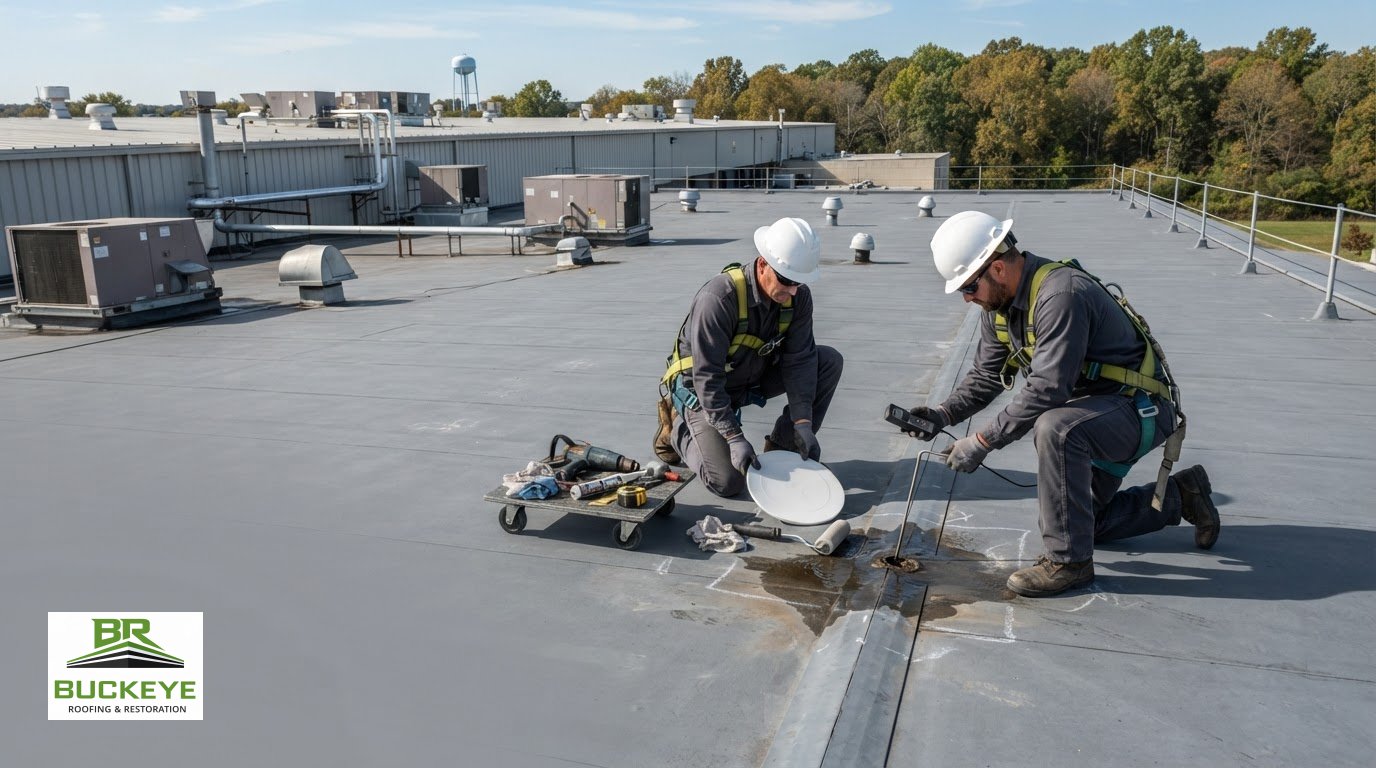
A single-ply roof can be punctured by dropped tools, sharp debris, or foot traffic during roof work and maintenance. An industrial roof repair company locates the damage, checks for surrounding moisture, and selects a repair compatible with the roofing membrane. The right fix depends on the puncture’s size and location, the membrane’s condition, and whether water has reached the layers below.
A small opening may seem straightforward, but a patch won’t solve the problem if a nearby seam or flashing detail is also failing. Leaks, interior water marks, and visible membrane damage can point to trouble, though the source isn’t always directly above the stain.
This guide explains why punctures happen, what professionals examine before repairing a single-ply roof, and how to recognize when damage needs prompt attention. You’ll also learn what to expect from an inspection, how to assess commercial roofing work, and which maintenance steps can help reduce repeat damage. The goal is a practical repair decision based on the roof’s actual condition, not an automatic recommendation to replace it.
Key Takeaways
- Learn which roof conditions can point to a repair need and when replacement may deserve consideration.
- Compare roofing professionals by how they assess the roof and explain the recommended work.
- See how regular inspections and practical upkeep can help catch small issues early.
- Understand what to do when roof damage threatens building operations, without attempting unsafe roof access.
- Find out how an inspection can help determine whether repair, restoration, or coating fits the roof’s condition.
What are the signs that I need to repair or replace my commercial roofing?
Interior leaks, visible membrane damage, and water lingering after rain can signal a roofing problem. The location and extent of damage help determine whether a focused repair may work or replacement deserves consideration.
Signs of Commercial Roof Damage
Look for ceiling stains, damp insulation, peeling finishes, or recurring leaks near roof penetrations. Visible roof concerns include punctures, open seams, damaged flashing around vents or HVAC units, and blisters. Water can travel beneath a single-ply membrane, so an interior stain may not be directly below the entry point.
Standing water is another warning sign. Water remaining on a commercial roof for a day or two after rain can indicate a drainage or roofing issue. If it remains for more than forty-eight hours, it can accelerate material deterioration and add weight to the structure.
Higher energy bills and an aging roof may also warrant an inspection, particularly when accompanied by visible damage or interior water marks. Staff can document stains from inside the building. Leave roof access and close-up checks to trained professionals.
Repair and Replacement Needs
Commercial roof repair addresses localized defects, such as a puncture, failing seam, or isolated flashing problem. Replacement involves removing and installing a roofing system when damage is widespread or the existing roof cannot provide a sound base for repair. An inspection should assess the membrane, seams, penetrations, drainage, and signs of moisture beneath the surface.
A patch may suit one isolated defect, while leaks across several areas can point to broader system problems. A new roof installation differs from a repair. The right scope depends on the existing roof, building use, drainage, and extent of damage.
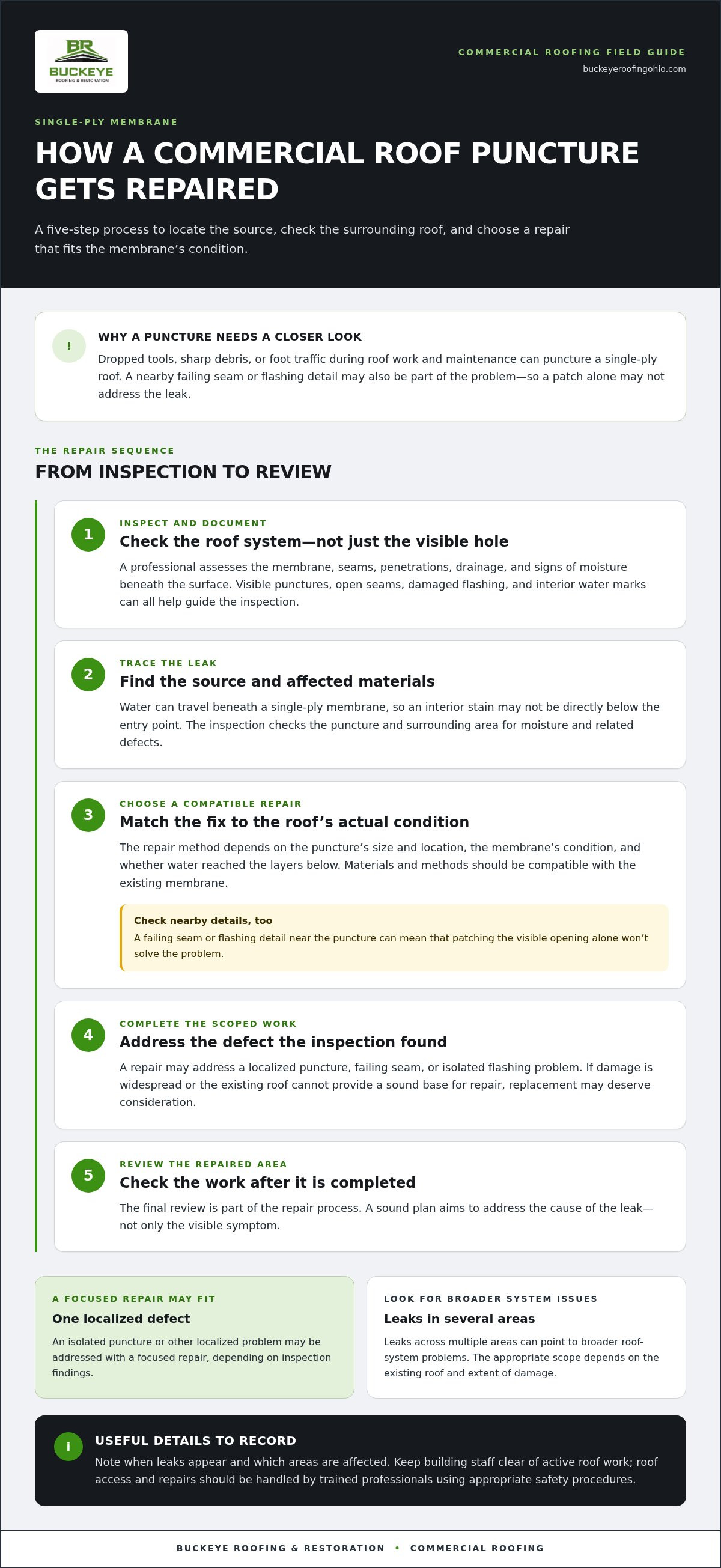
A repair project generally follows these steps: inspect and document the roof, identify the leak source and affected materials, select a compatible repair method, complete the work, and review the repaired area. This process helps address the cause, not just the visible symptom.
Roof access and repairs require trained professionals using appropriate safety procedures. Building staff should keep clear of active work areas and avoid attempting membrane repairs, especially when roof access is unsafe.
For commercial properties in Southeast Michigan, including Adrian, Battle Creek, and Kalamazoo, freeze-thaw cycles and snow or ice make drainage and roof condition worth monitoring. Record when leaks appear and which areas are affected. These details can help a commercial roofing contractor investigate efficiently.
Contractor listings can help identify companies serving the region, but a listing alone doesn’t show experience with commercial systems. Compare relevant project experience, inspection findings, and whether the proposed work addresses repair or replacement needs. For installation, the existing roof, building use, drainage, and selected system all matter.
Finding and comparing local roofing professionals
Industrial and warehouse roofs must suit the building’s use, drainage, and existing roofing system. Assess an industrial roof repair company by its commercial experience, inspection process, and repair recommendations.
Industrial and Warehouse Roofing
A warehouse roof may cover broad, low-slope areas, while a manufacturing facility can have rooftop equipment and penetrations to assess. Those details affect leak investigation and repair access. Ask whether the contractor has worked on comparable commercial buildings and can explain how the proposed solution fits your roof’s layout, drainage, and operations.
Low-slope and flat roofs aren’t designed to be perfectly level, but they do need drainage. A contractor should identify how water moves across the roof and whether seams, flashing, or penetrations need attention. For a facility with TPO or EPDM, experience with that membrane matters because repair materials and methods must match the existing system.
Questions for Roofing Contractors
Ask specific questions to understand the proposed work, not just its scope. Find out how the contractor will locate the leak, which roof areas they’ll inspect, and what findings support the repair plan. For example, ask whether the estimate distinguishes a localized membrane repair from work on seams or flashing.
- Does your team handle commercial and industrial roofing systems?
- Are you licensed, bonded, and insured for commercial roofing projects?
- What materials and steps will the repair include?
- What does any offered warranty cover, and what exclusions or maintenance terms apply?
Warranty terms vary by project and provider. Get the coverage, exclusions, and maintenance conditions in writing before work begins.
Choosing a Qualified Contractor
Choose an industrial roof repair company that documents roof conditions and connects each recommendation to an observed defect. A useful inspection explains the repair area, materials, and limits of the proposed work. Ask for a written scope that separates necessary repairs from optional work, so you can compare estimates on the same basis.
Check that the contractor’s commercial experience matches your roof type and building needs. A strong proposal is specific, not simply a promise of quality work. Look for clear communication about access, work areas, and coordination around warehouse or plant operations.
Contractor listings can help identify providers serving your area, but a directory entry doesn’t establish system experience. Review the company’s stated commercial work, then compare its inspection findings and written scope with other proposals. Geographic coverage matters too, particularly for facilities with more than one building or location.
Comparing Roof Repair Options
Repair methods depend on the roofing material and the defect. A TPO membrane, for example, needs a compatible membrane repair; EPDM repairs use materials suited to that rubber membrane. A metal roof may need attention at a panel, fastener, or seam, while built-up roofing requires a repair compatible with its layered construction.
These systems aren’t interchangeable. Ask the roofing contractor to name the existing system, identify the damaged component, and explain why the selected repair suits it. A recommendation should also account for nearby deterioration; treating one puncture won’t address a separate failing seam or flashing detail.
What type of maintenance do commercial roofs require?
Commercial roof maintenance combines scheduled inspections with practical upkeep. A written record helps facility managers track defects, completed repairs, and changes between visits.
Roof Inspections and Estimates
A professional inspection should review the membrane, seams, flashing, penetrations, drainage, and visible signs of moisture. The inspector can document damage with notes and photographs, then explain which findings need attention. For example, a puncture beside an HVAC unit calls for checking the surrounding membrane and flashing, not just the opening.
Use the inspection findings to understand the written estimate. It should identify affected areas, proposed materials, repair scope, and any separate work. Compare the listed tasks with the inspection findings, and keep the report with your maintenance records.
Before approving work, match each estimate item to an observed condition. If a report identifies a failing seam and a separate puncture, the scope should show how each will be addressed. That connection helps distinguish a targeted repair from broader restoration or replacement recommendations.
Inspection and Maintenance Frequency
Schedule commercial roof inspections at least twice a year to catch minor issues before they become costly repairs. Add inspections to the building’s maintenance calendar, and arrange a professional review when leaks, storm damage, loose materials, or other concerns appear.
Between professional visits, facility staff can observe the roof from safe locations and note interior stains, ceiling drips, or changes around rooftop equipment. Don’t climb onto the roof to investigate. Record the date, affected room, and conditions, such as rain, so the inspection can focus on useful details.
Keep roof drains and surfaces clear of debris to help prevent water pooling. Maintenance staff should not step onto a membrane or move equipment without appropriate training and access procedures. If drainage looks blocked or water remains after rain, document the location and arrange a professional assessment.
- Log inspection dates, findings, and completed work.
- Record recurring leaks by room and roof area.
- Keep drains and roof surfaces clear of debris.
- Arrange prompt repairs for punctures, blisters, and failing seals.
Prompt repairs can help prevent a small defect from allowing more water beneath the roofing system. A documented maintenance history also gives an inspector context, such as whether the same seam or roof area has repeatedly needed attention.
Inspections and preventative maintenance cover the whole roofing system, not only the spot where water appears indoors. A consistent record helps connect roof conditions with repair decisions and identify developing problems before they disrupt building operations.
Emergency roof repair
After a storm, first protect people and building operations, then arrange a professional roof assessment. Active water entry, loose materials, or damage near electrical equipment calls for prompt attention, not an untrained rooftop inspection. Assign one staff member to coordinate reports so observations and access details reach the roofing professional clearly.
Keep employees away from affected rooms and mark wet floors or areas beneath ceiling damage. If water is near electrical equipment, keep clear and contact appropriate building personnel. Move inventory only when safe, and place containers to catch drips without putting anyone beneath a sagging ceiling or unstable materials.
Document what you can see from inside: the affected room, visible ceiling damage, water location, and when the leak began. Take photos from a safe position, including a wider view showing nearby equipment or walls. Record whether the leak changes during rainfall, but don’t assume the roof opening is directly above the stain.
For storm damage across multiple buildings, record each address and affected area. A facility manager can share the list with the roofing contractor and coordinate access with site staff. If several properties in one county are affected, organize notes by building and identify which spaces have active water entry or operational impacts.
Share practical access details before the assessment: the site entrance, check-in process, restricted work areas, and a staff contact who can accompany the crew. For a warehouse or manufacturing facility, note loading activity or equipment that may limit access. This helps the roofing team plan its visit without disrupting unrelated operations.
A temporary tarp may limit water entry until permanent work is possible, but installing one requires safe access and proper securing. Wind can loosen an improperly placed tarp, creating another hazard. Don’t climb onto a wet, icy, or storm-damaged roof; leave temporary protection to qualified professionals with suitable equipment.
Temporary protection isn’t a completed repair. Once conditions allow, a professional assessment should distinguish immediate water-control work from permanent repairs. Share any temporary measures already taken, including where materials were placed. That record can help the roofer inspect affected areas without mistaking temporary coverage for a completed fix.
Ask for a clear account of the immediate scope: what needs temporary protection, what requires permanent repair, and what needs further investigation. The contractor should document observed damage and explain how the proposed work addresses it. Good workmanship starts with finding the cause, not covering visible damage without examining related roof details.
Storm damage doesn’t automatically mean roof replacement. A localized defect may call for repair, while widespread damage or underlying deterioration can change the recommendation. Keep the assessment and repair records with building maintenance files so facility staff can coordinate follow-up and plan around any remaining work.
Roof maintenance and damage prevention
A maintenance plan helps a property manager track roof condition and address small defects before they spread. For a single-ply membrane, practical prevention includes limiting unnecessary foot traffic, controlling work areas, and recording any damage found after rooftop service.
Tools, fasteners, and equipment can puncture a membrane during HVAC or other roof work. Before a crew begins, identify designated access routes and explain that materials shouldn’t be dragged across the roof. After the work, have a qualified person report any new marks, loose seams, or disturbed flashing for professional review.
Schedule commercial roof inspections at least twice a year to identify minor problems before they become costly repairs. Add an inspection after severe weather or work involving rooftop equipment. A dated record of findings helps staff compare the same roof areas across visits and note whether a defect has changed.
Keep roof drains and surfaces clear of debris to help prevent water pooling. Facility staff can report blocked drainage or debris they can see safely, but shouldn’t climb onto a roof without proper training and access procedures. If water remains after rain, record the area and arrange a professional assessment.
Prompt repairs to punctures, blisters, and failing seals help prevent leaks and extend roof life. Maintenance records should identify the location, observed issue, and completed repair. For example, tracking recurring damage near a service route may show where access practices need adjustment, rather than treating each puncture as unrelated.
- Log inspection findings, repair dates, and affected roof areas.
- Tell maintenance crews where roof access is permitted.
- Report new punctures or loose materials for professional review.
- Keep drains and roof surfaces clear of debris.
Metal roofing needs system-specific attention too. A maintenance record can track visible changes at panels, fasteners, seams, or penetrations, while a qualified roofer determines whether repair is needed. Membrane and metal systems aren’t interchangeable, so match the inspection and repair approach to the roof type.
An affordable maintenance plan prioritizes known vulnerabilities instead of waiting for interior damage. Start with recurring leak areas, roof penetrations, drainage paths, and locations where service crews regularly work. Thanks to a clear log, property teams can share useful details with an inspector and make decisions based on the roof’s observed condition.
Schedule a commercial roof inspection to review punctures, drainage, and maintenance needs before choosing the next step.
Buckeye Roofing & Restoration: Commercial Flat Roofing
Buckeye Roofing & Restoration helps commercial property owners address punctures, leaks, and wear on flat and low-slope roofs. Its commercial flat roof repair targets identified damage, while an inspection can show whether a localized repair is suitable or broader work deserves consideration.
For roofs with more extensive wear, commercial roof restoration or coatings may be suitable when the roof’s condition, substrate, moisture levels, drainage, and structural integrity support them. If the existing system cannot be appropriately repaired or restored, an inspection can help determine whether replacement is the practical next step.
Building owners and facility managers can discuss a roof concern and arrange an assessment through Buckeye Roofing & Restoration’s contact page.
Make the Next Roof Decision With Clear Information
A puncture is a reason to investigate, not an automatic reason to replace the roof. Let the inspection findings guide the decision: the repair scope should address the damage found, while broader work should account for the roof’s overall condition. An industrial roof repair company that explains its findings plainly can help you plan around building needs and avoid treating every roof problem the same way.
Buckeye Roofing & Restoration provides commercial flat roofing, commercial flat roof repair, and commercial roof restoration. A free inspection can help identify the best next step and whether restoration suits the roof’s condition.
Share the concern affecting your facility and take the next step at Buckeye Roofing & Restoration’s website. A clear assessment gives you a practical starting point for caring for the roof.
Frequently Asked Questions
What are some of the most common problems with commercial roofing?
Commercial roofing problems often start where materials meet or the roof is interrupted. Examples include loose membrane seams, punctures near equipment, flashing failures, and drainage trouble. The same symptom can have different causes: a stain beneath a roof opening may come from a nearby seam rather than the opening itself. Track when and where symptoms occur to help distinguish recurring trouble from an isolated defect.
What factors impact the cost of commercial roofing?
Project costs depend on factors such as roof size and complexity, roofing material, existing condition, building access, labor, and local permits. A roof with difficult access or several equipment penetrations may need a different scope than an open roof with isolated damage. Compare written estimates by scope and materials, not by the total alone.
What questions should I ask a commercial roofing contractor?
Ask what the inspection found, how each recommended task addresses those findings, and which materials the crew plans to use. Also ask how the work will be documented and what conditions could change the scope once work begins. For example, clarify how the contractor will handle concealed wet materials discovered during a repair. Request the answers in writing alongside the proposed scope.
What services do industrial roof repair companies provide?
An industrial roof repair company may inspect roofs, trace leaks, repair damaged membranes or metal panels, maintain drainage details, restore existing systems, or replace roofs that are no longer suitable for repair. The exact scope depends on the building and its roofing system. Buckeye Roofing & Restoration provides commercial flat-roof repair, restoration, coatings, and replacement, along with commercial roofing inspections and maintenance.
How much does industrial roof repair cost per square foot in the United States?
There isn’t one useful per-square-foot figure for every industrial repair. The price depends on the case and is given after a quote request; contractors weigh the damaged area, roofing material, access, roof condition, labor, and any related work. A small membrane puncture differs from repairs involving multiple seams or underlying damage. Ask for a written scope that explains the work and materials included.
What licenses, insurance, and certifications should an industrial roofing company have?
Ask whether the contractor is licensed, bonded, and insured for commercial roofing projects, then review the documentation relevant to your project. Licensing rules can depend on the location and work involved, so don’t assume one credential applies everywhere. If a proposed repair uses a particular membrane system, ask about relevant training or manufacturer credentials and how the crew’s experience fits that roof type.
How do industrial roof repair companies assess leaks and roof damage?
They compare interior symptoms with roof details and trace likely water paths. Water can travel beneath a membrane, so the ceiling stain may not be directly below the entry point. The assessment can include roof transitions, penetrations, seams, and interior conditions. Share maintenance records and prior repair locations; recurring problems near the same detail can help focus the investigation.
When should an industrial roof be repaired versus replaced?
Repair is generally appropriate when damage is limited and the surrounding roof remains serviceable. Replacement deserves consideration when defects are widespread, repairs keep recurring, or the existing system and underlying materials no longer provide a sound basis for repair. An inspection should assess the membrane, substrate, moisture, drainage, and structural condition. Those findings help determine whether a localized fix or broader project is appropriate.

Article by
Harry Stanley III
Harry Stanley III is a construction marketing strategist and fractional CMO at H&A Marketing. He has helped construction companies grow through website strategy, SEO, paid advertising, branding, lead generation, CRM systems, and professional content. His past work includes helping Meraki Solar generate an additional $3.7 million in revenue in his first year and supporting American Builders as a fractional CMO. Today, Harry works directly with custom home builders and construction companies to build marketing systems designed to generate qualified leads and measurable growth.