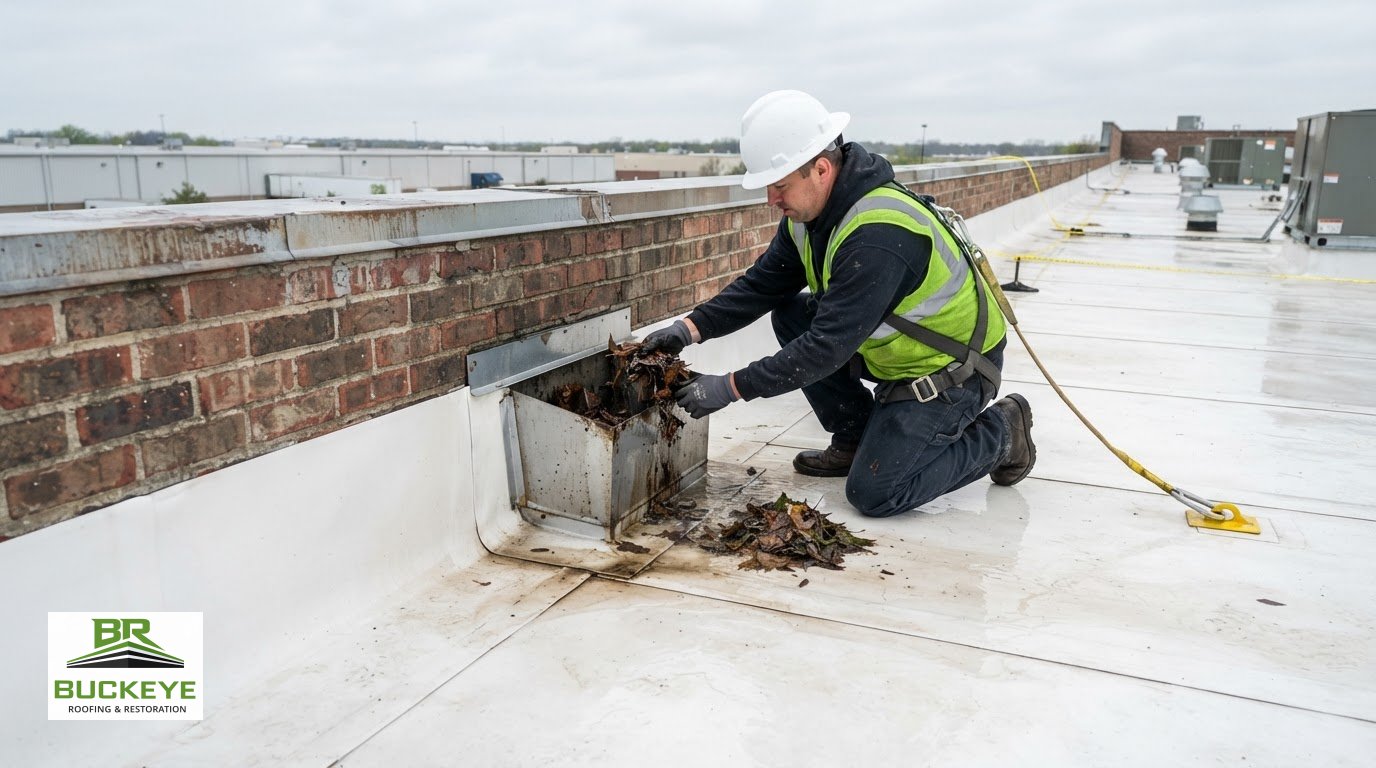
Clear scuppers help commercial roofs drain as designed. Schedule commercial roof scupper drain maintenance at least twice a year, in spring and fall, and inspect more often if trees or recurring clogs bring debris onto the roof. A scupper is an opening through a parapet wall that lets roof water drain out.
If you manage a warehouse, office, manufacturing facility, or other commercial property, it’s easy to focus on a leak only after water appears inside. Regular drainage checks can reveal blocked outlets, damaged scuppers, and persistent ponding earlier.
This article explains how scuppers work, what to check during routine maintenance, and when cleaning or professional repair makes sense. The right inspection schedule depends on the building, nearby trees, weather, and drainage history.
Key Takeaways
- Know how scuppers, roof drains, gutters, and downspouts route water so you can describe drainage concerns clearly.
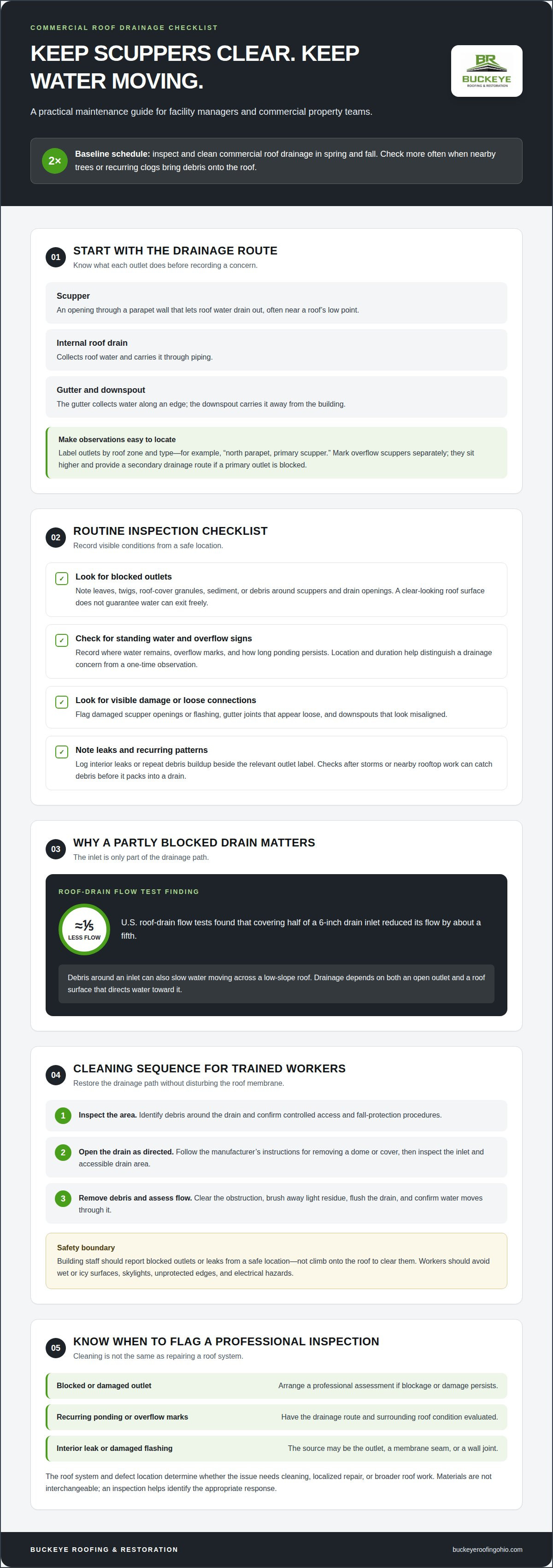
- Plan to inspect and clean commercial roof drainage in spring and fall, adjusting the schedule when trees or recurring clogs add debris.
- Debris can restrict drainage flow, so a clear-looking roof surface doesn’t always mean water can exit freely.
- Standing water deserves attention, but its location and how long it remains help distinguish a drainage concern from a one-time observation.
- Blocked or damaged outlets, overflow marks, recurring ponding, and interior leaks are signs to arrange a professional roof inspection.
How are scuppers, gutters and downspouts repaired?
Scuppers, roof drains, gutters, and downspouts move water through different parts of a commercial roof system. A scupper is an opening through a parapet wall, often near a roof’s low point. An internal roof drain collects water and carries it through piping. Gutters collect water along an edge, while downspouts carry it away from the building.
Clear labels help facility teams and roofers describe drainage problems accurately. A roof plan or maintenance log can identify each outlet by roof zone and type, such as “north parapet, primary scupper” or “warehouse bay, internal drain.” Mark overflow scuppers separately from primary outlets. They sit higher and provide a secondary drainage route if a primary outlet is blocked. Record visible standing water, leaks, or overflow marks beside the relevant label, based on observations from a safe location.
Cleaning removes leaves, twigs, and loose roof-cover granules. Repair is needed if a scupper opening, its surrounding flashing, or a gutter connection is damaged. Replace a component if it is badly corroded, deformed, or no longer forms a sound connection. Water at the outlet does not always mean the outlet has failed: the source may be a membrane seam or wall joint. A roofing professional checks the surrounding roof system before recommending a repair.
Scupper maintenance tools include a flashlight, gloves, a soft brush, and a hand scoop for loose debris. Trained roofing personnel should select and use tools and repair materials appropriate for the roof system. Repair materials may include compatible flashing or sealant. Don’t use roof cement as a universal fix. It may not bond to every membrane or address wet insulation, failed metal, or movement at a wall joint. Commercial roof drains and scuppers need checks for clear flow and sound connections.
On TPO and EPDM roofs, repairs must suit the membrane and the scupper’s flashing detail. Metal roofs need attention to the metal outlet and its connection, not an assumed membrane repair. The roof system, existing materials, and defect location determine the work; materials aren’t interchangeable. A professional inspection can establish whether the issue needs cleaning, a localized repair, or broader roof work.
Gutter and downspout maintenance includes clearing debris, checking for standing water, and looking for loose joints or misalignment. If water remains in a clear gutter, poor slope toward the downspout may be the cause. A misaligned downspout can discharge water against the building. Trained personnel should handle repairs or realignment to restore the intended drainage route without directing runoff toward the roof edge or building perimeter.
Commercial roof drain work requires controlled access and fall-protection procedures. OSHA roofing fall-prevention guidance explains why proper access and protection matter, even for a task that seems quick. Workers should avoid wet or icy roof surfaces, skylights, and unprotected edges. Building staff should report blocked outlets or leaks from a safe location rather than climb onto the roof to clear them.
How are clogged roof drains and leaders cleared?
Cleaning restores the drainage path, while a flow check can show whether a blockage remains. On commercial low-slope roofs, trained workers clear debris without disturbing the membrane or compromising safe roof access.
Drainage Capacity and Debris
Leaves, twigs, and roof-cover granules narrow the drain opening and reduce the water that can pass through. U.S. roof-drain flow tests found that covering half of a 6-inch drain inlet reduced its flow by about a fifth. That partial blockage can matter during heavy rain, especially when standing water already collects near a roof’s low point.
Debris around the drain matters too. A clear inlet may still sit within leaves or sediment that slow water moving across the roof. On low-slope roofs, drainage depends on both an open outlet and a roof surface that directs water toward it. A flow problem may involve the drain, nearby debris, or the route leading to the outlet.
Blockage Prevention
Prevent blockages by removing debris before it gathers at drain openings, scuppers, or leader connections. Checks after storms and nearby rooftop work can catch material before it packs into a drain. Keeping the area around the inlet clear also makes it easier to see whether water reaches the opening or remains standing beside it.
Drain baskets and domes help keep larger debris out, but they still need inspection and cleaning. A basket packed with leaves can restrict flow even when the pipe is clear. Follow the drain manufacturer’s instructions when removing or replacing a cover, and note recurring debris patterns to inform future maintenance.
For a commercial roof drain, trained workers follow a controlled sequence: inspect the area, open the drain according to the manufacturer’s instructions, remove the blockage, and test the flow. A flashlight can reveal debris inside the opening; a pipe brush can clear light buildup from drain sides. Workers then flush the drain and confirm that water moves through it.
- Clear leaves and loose debris from around the drain without pushing material into the opening.
- Remove the drain dome as directed, then inspect the inlet and accessible drain area.
- Remove the obstruction, brush away light residue, and flush the drain to assess flow.
Clearing a blocked scupper or downspout safely requires trained personnel, approved roof access, and fall-protection procedures. Workers shouldn’t attempt the task on wet or icy surfaces, near an unprotected edge, or where electrical hazards are present. Building staff can instead report the outlet’s location and visible overflow from a safe position.
Common contributors to leaks, ponding, and water damage include debris blocking an outlet, damaged flashing around a scupper, and poor drainage toward the opening. A clogged leader may also prevent water from leaving the roof as intended. Standing water at one observation doesn’t establish the cause; recurring ponding or interior leaks warrant a commercial roof inspection.
Positive drainage on flat and low-slope roofs
A commercial flat roof isn’t truly level; its drainage system uses slope to move rainwater toward scuppers or internal drains. Positive drainage means water flows off the roof rather than remaining in persistent ponding. As general guidance, note whether water remains 24-48 hours after rain stops; this is not a universal drainage requirement.
A scupper carries water through a parapet wall and directs it outside, often into a downspout. An internal drain collects water at a low point and routes it through sloped piping beneath the roof. Both systems rely on clear openings and a roof surface that guides water toward them. If debris blocks a scupper, even a properly sloped roof may drain poorly.
Roof slope is shaped by the structure and roofing components, including the deck, insulation, and membrane. During an inspection, a roofing professional checks the route water follows, outlet locations, and areas where water remains. A single observation of standing water doesn’t reveal the cause. A blocked outlet, uneven surface, or drainage-design issue can produce similar signs.
Tapered insulation helps direct water across low-slope roofs by creating a gradual incline beneath the membrane. Some tapered boards provide a slope of 1/8 inch per foot; others provide 1/4 inch per foot. The right layout depends on roof geometry, drain locations, and how the system needs to move water. These figures describe examples, not a universal specification for every building.
Where water collects beside a parapet, a primary scupper near the low point may provide the routine outlet. A higher overflow scupper can provide a secondary route if the primary outlet backs up. Their locations and elevations affect how water leaves the roof. A professional evaluates the roof plan and drainage components before recommending changes.
After heavy rain, building staff can make useful observations from a safe location: note where ponding remains and how long after rainfall you observe it. Share the information with a roofing professional if water recurs or appears near a seam, drain, or wall. These details help narrow the inspection to a roof zone without assuming the membrane is the cause.
Persistent standing water can deteriorate some roofing materials, while poor drainage can contribute to leaks or damage. A low-slope roof with recurring ponding needs an assessment of its drainage system, not just a quick look at the visible surface. The evaluation should consider outlet condition, slope, membrane details, and roof structure together.
Edge drains and scuppers
At a roof edge, a scupper passes through the parapet and sends water outside. Its outlet may discharge away from the wall or connect to a downspout that carries water toward the ground. A separate edge drain or gutter collects runoff along the roof perimeter. Knowing the route serving each roof area helps locate a clogged outlet or staining below it.
Primary scuppers handle routine drainage, while overflow scuppers provide another route if the primary outlet backs up. Secondary roof drainage may be required where the roof perimeter could trap water during a primary-drain backup. Requirements depend on the applicable code and jurisdiction, so a roofing professional can assess the building’s drainage layout and consult the local building department as needed.
Scupper placement and size affect how well an edge drainage system works. The roof area served, local rainfall, and whether an opening provides primary or secondary drainage all matter. An overflow opening set too high may allow water to build up before escaping. When evaluating recurring ponding, a roofing professional should review outlet height and roof conditions, not just remove leaves from the opening.
Inspect the visible edge route for leaves, twigs, roof-cover granules, and displaced materials. Debris can clog the opening or collect where a scupper meets a downspout. From the ground, look for overflow marks, water staining, or a downspout that appears disconnected or misaligned. These signs help identify the affected roof edge without requiring building staff to access an unsafe roof.
After severe weather, check the drainage route for new blockages, damage, or leaks. Wind can move leaves and loose debris toward an opening, and freezing conditions can leave ice along an outlet. The check should cover the scupper, its connection to the roof membrane, and the outside discharge path. Water escaping at the wall or behind flashing may signal a repair issue rather than a simple clog.
Keep the discharge point clear so water can flow away from the building rather than collect beside its foundation. If the downspout ends near a walkway or loading area, note whether runoff leaves persistent wet areas or disrupts operations. A roofing professional can assess misalignment, damaged connections, and edge details along the full drainage route.
If overflow recurs, record the roof zone, visible outlet condition, and any interior leak or ceiling stain. Photos taken safely from the ground can help reveal patterns after storms. A professional inspection can determine whether the problem involves debris, a damaged scupper detail, inadequate drainage, or a combination of issues.
Recommended commercial roof drain cleaning frequency
Commercial roof drain cleaning schedules depend on the building and its conditions. Spring and fall are useful times to check drainage systems. Buildings beneath trees or with a history of clogged outlets may need more frequent checks. Ask a roofing professional to help set a schedule based on the roof’s debris load, design, and maintenance needs.
Spring cleaning can remove debris left by winter weather, while fall cleaning can clear leaves before winter. Depending on site conditions, a professional may suggest checks every three months in spring and summer, and every month in fall and winter. Treat these as possible schedules, not fixed requirements; debris load, past clogs, roof design, and the maintenance agreement all affect the right frequency.
Increase checks after unusual storms or rooftop construction. Wind can carry leaves and loose materials toward drains, while work crews may leave scraps near outlets. A storm-related inspection can reveal a blocked scupper, displaced drain cover, or new overflow mark before the next rainfall. Follow the roof manufacturer’s maintenance instructions and any applicable service agreement when setting the schedule.
How should commercial roof scupper maintenance be documented and scheduled? Build commercial roof scupper drain maintenance into recurring inspections at intervals set with a roofing professional, then add checks after unusual storms, rooftop work, or recurring clogs. For each observation, log the date, time, staff member’s name or role, drain location, visible condition, and recent heavy rain, wind, snow, or thaw.
A useful log records more than “drain cleared.” Note whether the outlet was clogged, what debris was removed, whether water remained standing, and whether the scupper or drain showed visible damage. Keep the original entry after resolving the issue, then add the closeout date rather than overwriting the record. Photos and location notes can help a roofing professional focus on the affected roof zone.
- Set inspection dates for every roof zone with a roofing professional.
- Add more frequent checks where trees or past blockages affect drainage.
- Schedule extra inspections after severe weather or rooftop construction.
- Retain completed log entries and record each issue’s closeout date.
Drain baskets and domes also need regular inspection and cleaning by a roofing professional. A clogged cover can restrict rainwater flow even when the drain opening below is clear. If the log shows recurring blockages, overflow, or interior leaks, a commercial roof inspection can help determine whether cleaning alone will address the problem.
Buckeye Roofing & Restoration: Commercial Roof Inspections and Maintenance
Buckeye Roofing & Restoration provides commercial roof inspections and maintenance to help building owners assess drainage concerns, recurring ponding, and roof condition. An inspection can determine whether a scupper issue needs cleaning, a targeted commercial flat-roof repair, or broader work.
Inspection findings guide the recommendation. The roof’s materials, drainage, membrane condition, and signs of moisture all matter when weighing repair against restoration. Restoration may suit some roofs, depending on inspection results and the roof’s overall condition. Not every drainage problem calls for extensive work.
If a commercial roof has recurring drainage problems or an active leak, contact Buckeye Roofing & Restoration to discuss an inspection.
Put Your Roof Inspection Findings to Work
Use drainage observations to guide the next maintenance decision, rather than assume the entire roof needs major work. Commercial roof scupper drain maintenance is one part of assessing how water moves across a roof and where a problem begins. An inspection can help distinguish a localized defect from wider concerns affecting the roofing system.
Buckeye Roofing & Restoration provides commercial flat roofing, commercial flat-roof repair, and commercial roof restoration. The right approach depends on the roof’s condition and inspection findings: a repair may address a specific damaged area, while restoration is considered based on broader roof conditions.
If recurring drainage concerns or a leak need professional attention, contact Buckeye Roofing & Restoration to discuss an inspection. A clear assessment gives you a practical basis for planning the next step.
Frequently Asked Questions
What is a roof scupper?
A roof scupper is an opening that lets water pass through a roof edge or parapet. For facility staff, the useful distinction is where its outlet leads: visible discharge can help locate staining or recurring runoff concerns from the ground. If the route is unclear, a roof plan or professional inspection can identify which roof area the scupper serves.
How do you know a roof drain needs repair?
Repair may be needed if water leaks around the drain connection, roofing materials have pulled away, or the drain assembly is visibly damaged. A leak that returns after the drain area is cleared also warrants investigation. Note where water appears inside and whether it follows rainfall. This information helps a roofer assess whether the drain detail or another roof area is involved.
Is a slow roof drain always a problem?
No. A slow drain during light rain may reflect the amount of water reaching it rather than a defect. Compare its performance during similar rain events and note whether water remains after nearby areas have drained. A change from the roof’s usual behavior, especially with a new ceiling stain or recurring ponding, is a reason to arrange a professional assessment.
What are the parts of a commercial roof drainage system?
Depending on the building, drainage components can include sloped roof surfaces, internal drains and leaders, scuppers, overflow outlets, strainers, gutters, and downspouts. The layout varies: one roof area may drain through an internal pipe, while another discharges through a wall opening. Facility plans help staff describe the location and route without accessing the roof.
Why do roof drains freeze, and do heat cables help?
Water remaining around an exposed drain or outlet can freeze in cold weather, and ice may restrict the route for rainwater or meltwater. Heat cables may help keep specific installed areas warmer, but they don’t clear debris or fix a drainage problem. A professional should assess the drain layout, cable placement, and roof conditions before relying on heat as a solution.
Why is water coming out of the overflow scupper?
Water exiting an overflow scupper means it has reached that outlet. The primary drain may be restricted, or runoff may be arriving faster than the primary route can discharge it. Note whether overflow occurs during ordinary rain or only intense weather, and whether it coincides with interior leakage. Repeated overflow merits a professional assessment of the drainage arrangement.
How often should commercial roof scupper drains be inspected and maintained?
Use the inspection schedule described earlier as a starting point, then adjust it to the building’s conditions. Tree cover, a history of clogs, nearby rooftop work, or repeated overflow can justify additional checks. Keep a maintenance log that identifies the outlet and records observations, weather, corrective work, and closeout. The roof manufacturer’s instructions and service agreement also inform scheduling.
How can you tell if a commercial roof scupper is clogged or damaged?
From a safe ground-level view, look for water stains beneath the outlet, visible debris at an accessible discharge point, or a disconnected downspout. A bent opening, separated joint, or corrosion can suggest physical damage rather than a simple obstruction. These signs help identify where attention may be needed, but a roof professional must inspect the detail to determine the cause.

Article by
Harry Stanley III
Harry Stanley III is a construction marketing strategist and fractional CMO at H&A Marketing. He has helped construction companies grow through website strategy, SEO, paid advertising, branding, lead generation, CRM systems, and professional content. His past work includes helping Meraki Solar generate an additional $3.7 million in revenue in his first year and supporting American Builders as a fractional CMO. Today, Harry works directly with custom home builders and construction companies to build marketing systems designed to generate qualified leads and measurable growth.