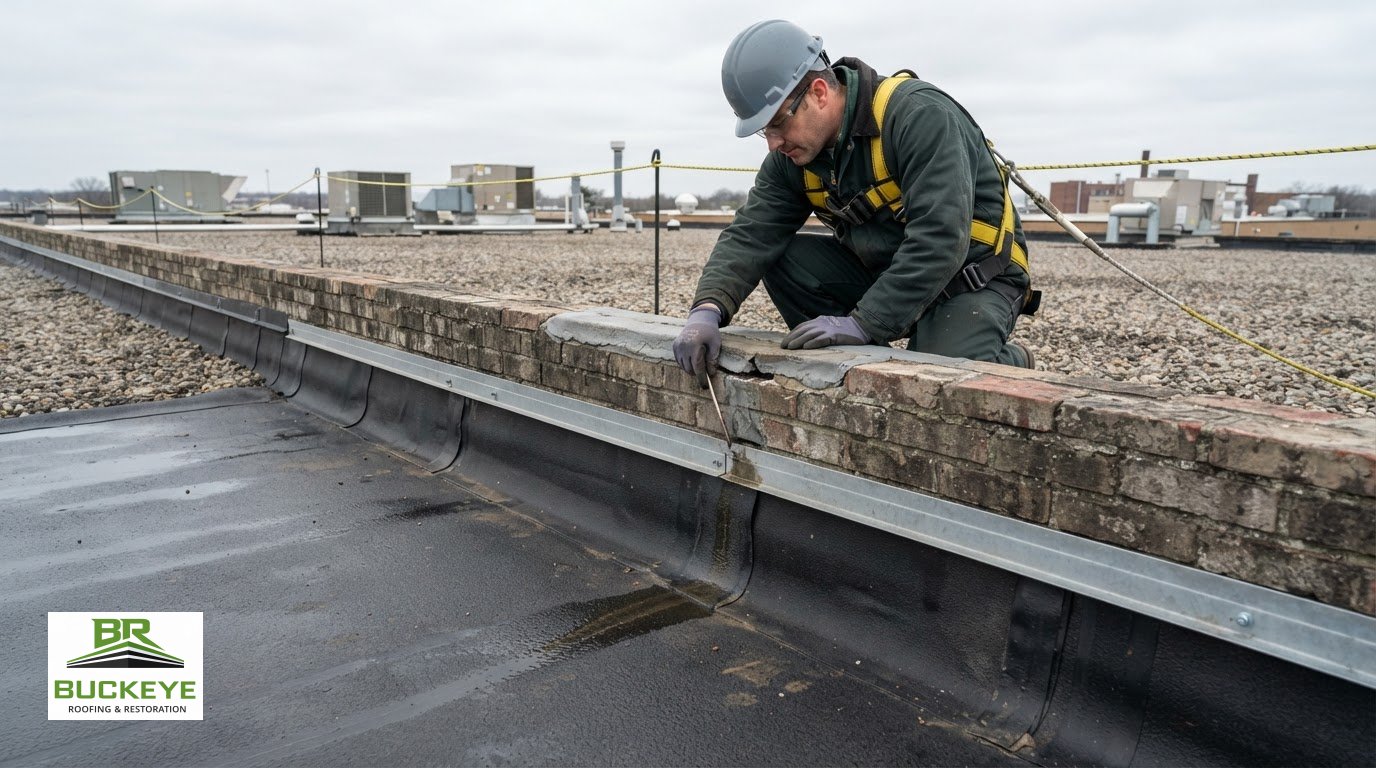
Need a commercial roof quote? If you’re searching for commercial roofing repair near me, start with an inspection rather than guessing from a leak or a view from the ground. A useful assessment connects visible symptoms to likely causes and outlines repair options for your building.
It’s reasonable to want a clear scope and price before planning the work. The right repair, however, depends on the roof system, the condition of existing materials, drainage, and whether moisture has spread beyond the visible area. This article explains what a commercial roof assessment covers, how systems such as TPO, EPDM, and metal affect repair decisions, and what to look for in an estimate. You’ll also learn when a targeted repair may fit and when restoration or replacement deserves consideration, without assuming every leak calls for a new roof.
Key Takeaways
- Understand how roof inspections connect visible leaks to underlying issues and shape a repair scope.
- See why the building, existing roof system, drainage, and condition all matter when choosing materials or a repair approach.
- Learn which details to look for in an estimate so you can understand the proposed work and compare scopes clearly.
- Use relevant commercial roofing experience and review patterns as context when assessing a provider, not as a substitute for a clear inspection and estimate.
- Recognize when targeted repair may fit and when restoration or coatings merit assessment based on the roof’s condition.
Roof diagnostics, design, estimating, and installation
A sound roof project starts by tracing the problem, defining its scope, and matching the work to the building. Inspection findings then guide the estimate, work plan, maintenance schedule, and funding decisions.
Roof Assessment and Project Planning
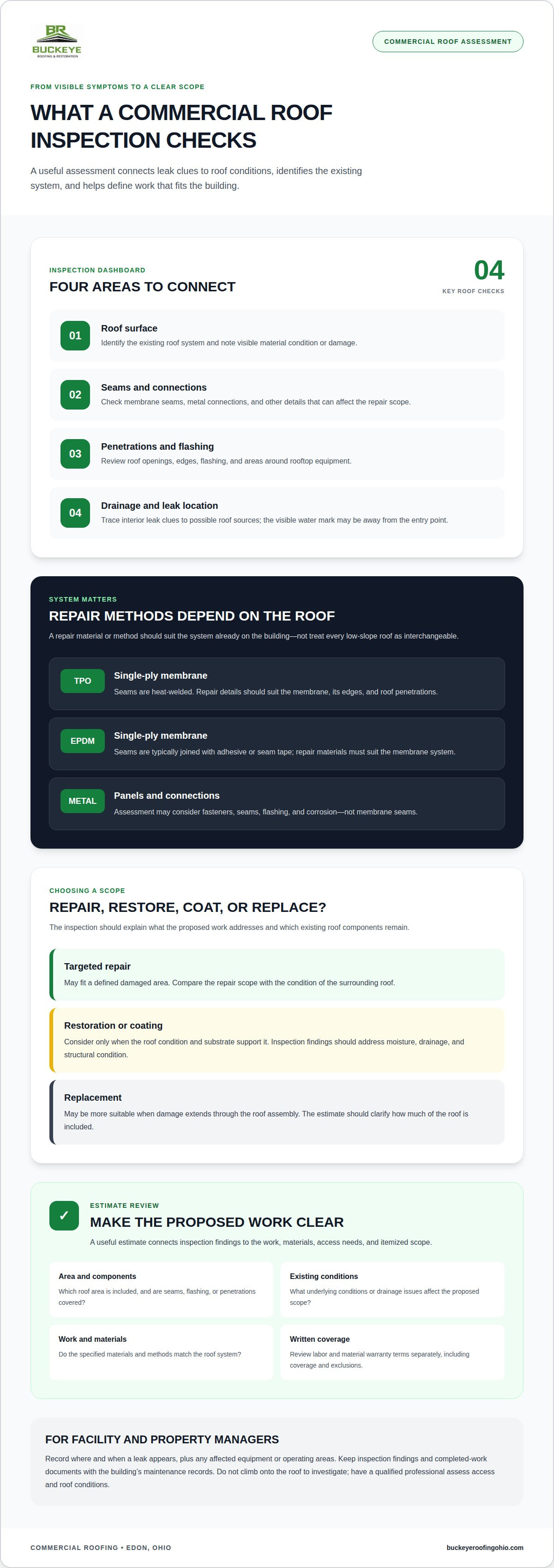
A contractor checks the roof surface, seams, penetrations, drainage paths, and interior leak locations. Water marks near a warehouse wall, for example, may point to an issue farther upslope. The assessment should connect observations to proposed work, materials, access needs, and an itemized estimate. During the work, the crew follows that scope and documents any changes.
Regular maintenance inspections can help identify repair needs before they grow. They also give property managers a record of recurring leaks, drainage concerns, and previous repairs. Property owners and HOA boards can compare the project scope with reserve planning, budget approvals, and available funding to see how the work fits current capital plans.
Leak and Emergency Repairs
If there’s an active leak, note where water appears inside and move inventory or equipment away from the affected area when it’s safe. Don’t climb onto a commercial roof to find the entry point. A professional inspection can trace the leak through seams, penetrations, flashing, or drainage areas, then define repairs that address the source rather than just the visible stain.
Emergency repair focuses on active water entry and limiting further interior exposure, but the term does not establish a round-the-clock response time. Tell the contractor where the leak appears, when it occurs, and what interior damage you’ve observed. In a manufacturing facility, note any affected equipment or production areas so the inspection can account for operations and access.
Repair Versus Replacement Costs
A targeted repair generally covers less than a full replacement, which renews a larger portion of the roof assembly. The estimate depends on the damaged area, existing system, underlying conditions, drainage, access, and materials required. Compare the repair and replacement scopes, including what each addresses and which existing roof components remain. Funding decisions also depend on project scope, available funds, and approval timing.
Permit and building-code requirements depend on the work and the property’s jurisdiction. Before installation, establish which requirements apply in the relevant city or county. The U.S. Environmental Protection Agency notes that some building codes limit roofs to no more than two layers. This can affect reroofing plans when existing layers remain, so account for roof-layer conditions during project planning.
That review can also account for local wind exposure and product documentation. Design wind speeds reach 170 mph in certain coastal zones of Miami-Dade County. Miami-Dade requires roofing products installed in the county to carry a Notice of Acceptance issued after independent testing for wind, impact, and water resistance. Confirming that documentation during design and estimating helps align specified materials with applicable requirements before work begins. Qualification can be another item to verify: GAF Master Elite status requires a 40-point factory inspection. Affordable Contractors, Inc. says commercial roofing projects may take longer than residential roof replacements, so scheduling should reflect the project’s scope and installation needs.
Commercial roofing systems and materials
The right repair material depends on the existing roof, its condition, drainage, building use, and climate. The proposed work should suit the system already in place, rather than treating every low-slope roof as interchangeable.
How common commercial systems differ
TPO and EPDM are single-ply membrane systems, but their materials and joining methods differ. TPO seams are heat-welded, while EPDM seams are typically joined with adhesive or seam tape. Repair materials and methods must suit the membrane and its details, including penetrations, edges, and rooftop equipment.
Commercial metal roofs use panels and connections rather than a continuous membrane. Repairs may address loose or damaged fasteners, seams, flashing, or corrosion. A coating forms a protective layer over a suitable existing roof, but it does not replace a damaged membrane or correct every underlying problem. Inspection findings determine whether repair, restoration, coating, or replacement is the right fit.
Match materials to building conditions
Consider how the building operates. A warehouse with rooftop equipment needs clear access and careful detailing around penetrations. A manufacturing facility may need repairs planned around ongoing operations. Drainage matters too: standing water or blocked drains can affect the scope and choice of roofing work.
During an assessment, the contractor identifies the existing system and checks its substrate, seams, flashing, drainage, and signs of trapped moisture. Coating or restoration is appropriate only when the roof’s condition and substrate support that approach. If damage extends through the roof assembly, replacement may be more suitable than applying a surface layer.
Understand labor and material warranties
Review labor and material warranties as separate parts of the project paperwork. A material warranty concerns covered roofing components; a labor warranty concerns specified installation or repair work. Written terms define coverage, exclusions, required maintenance, and any conditions for maintaining coverage. Don’t assume one warranty covers both materials and workmanship.
Ask for the covered system, repair area, and work description in writing. For example, a membrane repair scope should say whether it includes seams, flashing, or penetrations. Keep inspection records and completed-work documents in the building’s maintenance file. They help managers track past repairs and understand how future work relates to them.
If an inspection points to a targeted membrane repair, review the proposed scope for system-specific materials and details. Commercial roof repair should address the diagnosed condition, not just cover the visible symptom.
Roofing estimates and inspections
A roofing estimate should connect inspection findings to a clear scope of work. An inspection and an estimate serve different purposes. The inspection assesses roof conditions; the estimate describes proposed work and its price. Neither should rely only on a ceiling stain or a phone description. A site visit lets the contractor relate the requested work to the actual roof.
What the inspection should examine
A commercial inspection starts with the reported problem and the building’s roof history. The inspector evaluates accessible roof areas, seams, flashing, penetrations, drains, and visible surface damage. If a warehouse leak appears near a loading area, the indoor water mark may not be directly below the roof entry point. Findings should connect the reported leak to observed roof conditions and identify any areas needing closer assessment.
Interior observations can provide useful context. A facility manager can point out stained ceiling tiles, damp insulation visible from an accessible interior area, or leaks that occur in particular weather. Don’t climb onto the roof or disturb loose materials to gather evidence. Share photos taken safely indoors and relevant maintenance records with the inspector.
What a useful estimate includes
Read the estimate for specific work, not just a general label such as “roof repair.” A clear document identifies the affected area, proposed materials, preparation, repair method, and exclusions. For example, a scope may address a damaged seam and nearby flashing while noting separately whether the surrounding membrane needs further attention.
Compare estimates by matching their scopes line by line. One proposal may include removing damaged material, while another describes only a surface repair. Check how each addresses access, debris, concealed damage, and additional work discovered after installation begins. The lowest total alone won’t tell you whether the proposals cover the same tasks or roof conditions.
Inspection findings and next steps
An inspection can point toward repair, restoration, coating, or replacement, but these options address different conditions. A small, isolated defect may call for a targeted repair. A broader recommendation should explain which conditions support its scope, including substrate condition, moisture, drainage, and structural concerns. Coatings don’t substitute for correcting underlying damage.
Ask for the estimate and inspection findings in writing, then keep them with the building’s maintenance records. If your commercial property has an active leak, share its location and any interior effects when requesting an inspection. Request a commercial roof inspection or quote to discuss the building’s condition and next steps.
Commercial roofing providers
A commercial roof project calls for a contractor familiar with the building’s system and operating needs. Property managers can assess fit by reviewing the proposed scope, relevant commercial experience, insurance information, and how the provider explains inspection findings. A polished Google profile alone won’t show whether a contractor understands a warehouse membrane or a manufacturing plant’s roof access needs.
Match experience to the building
Start with the roof type and work required. A provider handling TPO or EPDM repairs should explain how the proposed method suits that specific membrane. Metal roofs have different seams, fasteners, and flashing details, so experience with membrane systems alone may not address every project need. The estimate should connect the building’s conditions to the proposed work.
Commercial experience also means planning around how the building is used. A warehouse operator, for example, may need roof access coordinated around deliveries, while a facility manager may need clear communication about areas affected by the work. Look for a scope that identifies roof areas, materials, and tasks. This makes proposals easier to compare and clarifies what each contractor will address.
Licensing, insurance, and credentials
Licensing and insurance requirements depend on the project and applicable jurisdiction. A commercial roofing provider should clearly state relevant credentials and insurance coverage. Manufacturer credentials may also matter when a proposed roofing system or warranty has specific installation requirements.
For a useful comparison, review the names and limits in the provider’s insurance documentation, along with any stated exclusions. Check that the written proposal identifies the contracting business and explains who performs the work. These details help property managers understand who is responsible for the scope, rather than relying on a brief phone conversation.
Compare communication and project planning
A practical provider explains findings in plain language. If an inspection identifies a leak near a drain, the recommendation should describe the observed condition and proposed correction. If the estimate recommends broader work, it should explain which additional roof conditions support that scope. Clear reasoning helps owners distinguish targeted repair from restoration or replacement.
Check how the contractor will communicate changes, document completed work, and coordinate access. A property manager overseeing several buildings, for example, may need separate scopes and records for each address. Google reviews can offer context about customer communication, but they can’t replace a project-specific inspection, detailed estimate, or written work plan.
Choose based on how well the roof system, proposed work, and building operations fit together. That’s more useful than a broad service-area claim or a generic promise of roofing solutions.
Ask the provider to explain any commercial designation it cites and how it relates to the proposed work, rather than treating a label as a substitute for a clear scope, insurance details, and communication plan. The page states that 1% of contractors are Platinum Elite Commercial Contractors. That figure provides context for the designation, but property managers should still assess the contractor’s experience against the building’s roofing system and operating requirements.
Company ratings and review counts
A star rating can help you screen commercial roofing providers, but it can’t tell you whether a company fits your building. Read review counts alongside comments, dates, and project details. A review about an office roof inspection, for example, says little about a contractor’s warehouse membrane repair work. Look for feedback that describes the building type and roofing work.
Read the details behind the rating
Reviews are most useful when they describe observable parts of a project. Look for comments about scheduling, communication on scope changes, cleanup, and follow-up after installation. A property manager’s account of coordinating roof access at a warehouse offers more context than a brief “highly recommend” with no explanation.
Review counts provide context, not proof of workmanship. A smaller set of detailed comments may describe relevant commercial work, while a larger set may cover unrelated services. Read several reviews rather than relying on one unusually positive or negative account. Note whether different customers describe similar communication or project-management experiences.
Check location and project relevance
Reviews from Ohio, Northeast Indiana, or Southern Michigan are more useful for assessing a property in Buckeye’s service area. Local conditions such as freeze-thaw cycles, snow, and drainage concerns can shape roof maintenance needs. A review from a warehouse near Toledo may offer useful context for a similar building, while the roof system and project scope still matter.
Search review text for specific terms such as “flat roof,” membrane repair, leak diagnosis, or commercial building. Then compare those comments with the proposed scope. If a reviewer mentions a repair but not the roof system, treat it as general service feedback, not proof of experience with your particular materials.
Use reviews as one part of due diligence
Google reviews and other public feedback can reveal recurring themes, but they don’t replace project documents. Compare reviewers’ comments with the inspection findings, estimate, insurance information, and written work plan. If reviews praise clear communication, for example, the proposal should also state the repair area, work included, and how changes will be documented.
Don’t treat a rating as a guarantee or one complaint as a complete account. Check whether comments concern commercial roofing, describe work similar to yours, and show whether the provider responds clearly and professionally. Reviews should inform your decision, not make it for you.
Schedule a commercial roof inspection to get a project-specific assessment and discuss the roof conditions behind the proposed work.
Buckeye Roofing & Restoration
Buckeye Roofing & Restoration helps commercial property owners assess roof problems and choose work suited to the building. Its commercial flat-roof repair addresses identified leaks and damage. If broader deterioration is present, an inspection can show whether restoration or coatings suit the roof’s condition, substrate, moisture levels, drainage, and structural integrity. Neither option fits every roof, so recommendations should follow inspection findings.
Share the leak location, roof system if known, and any inspection records when discussing your building. That context helps focus the conversation on the conditions affecting your roof, rather than assuming replacement is the only answer. Contact Buckeye Roofing & Restoration to discuss a commercial roof concern.
Make the next roof decision with clarity
Searching for commercial roofing repair near me often begins a larger decision: how to plan roof work without disrupting building operations. Before moving ahead, identify who needs to approve the work, which areas or activities need coordination, and what documentation your team needs to keep. A clear decision process turns an inspection and estimate into a manageable project plan.
Buckeye Roofing & Restoration provides commercial flat roofing, commercial flat-roof repair, and commercial roof restoration. The right approach depends on the roof’s condition and professional inspection findings, not the assumption that every problem needs the same fix. A focused discussion can clarify what your building needs and what information will support the next decision.
Contact Buckeye Roofing & Restoration to discuss your commercial roof. A practical next step can make planning easier.
Frequently Asked Questions
NEED A QUOTE TODAY?
You can request a commercial roof inspection and quote, but a same-day estimate isn’t promised. The roof needs an assessment before the repair scope can be priced. When submitting a request, include the building address, roof type if known, and a brief description of the issue. For example, note whether a leak affects a production area, stored goods, or office space.
best commercial roofing materials for repair
The right repair material depends on the existing roof system, its condition, drainage, and building use. TPO repairs should suit heat-welded seams, EPDM repairs should suit adhesive or seam-tape details, and metal repairs should address the panels, fasteners, seams, or flashing.

Article by
Harry Stanley III
Harry Stanley III is a construction marketing strategist and fractional CMO at H&A Marketing. He has helped construction companies grow through website strategy, SEO, paid advertising, branding, lead generation, CRM systems, and professional content. His past work includes helping Meraki Solar generate an additional $3.7 million in revenue in his first year and supporting American Builders as a fractional CMO. Today, Harry works directly with custom home builders and construction companies to build marketing systems designed to generate qualified leads and measurable growth.